Great Americans: John Colter's Run and the Duty of Courage and Endurance
An embodiment of the American frontier virtue of pressing forward when every instinct demands hesitation.
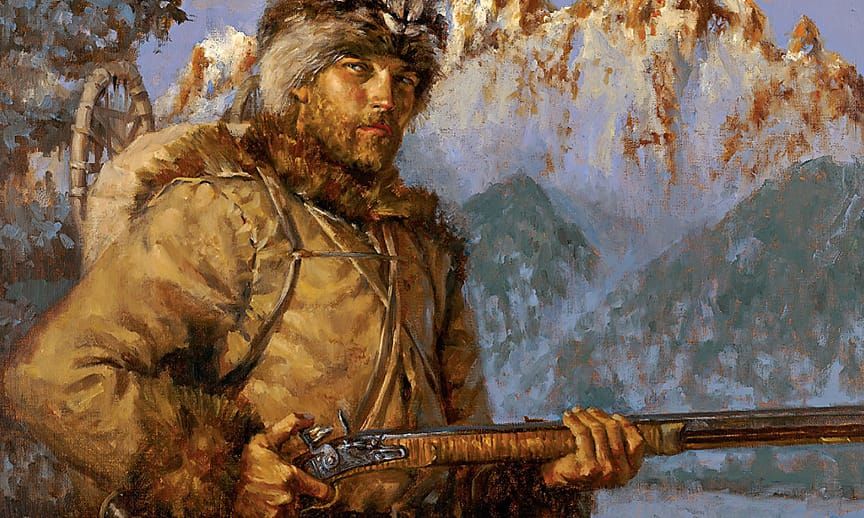
The trail steepens under the afternoon sun. Hot, dry air scours my throat as I crest the ridge and my dad’s voice cuts through the wind: “Keep pushing! Over the top!”
Every cell in my body wants to stop—to claim one stolen second at the summit, to gather breath before the descent begins. But that is the trap of habit that every man takes. To win, you must break through that instinct to hesitate. You sprint over the crest without mercy for lungs or legs, hurl yourself into the slope with a reckless faith that your body will hold, that your legs will keep churning faster than fear can catch them.
It was in memories like these that I first understood what a far tougher man had done on the Montana plains in 1809—when his life itself depended on refusing the hesitation that ordinary men would have taken. My father’s coaching instruction became the frame for everything that followed: the training that stretches body and the will past the limits that ordinary instinct allows. John Colter simply made the same truth universal:
Press harder when everything in you wants to stop.
Don’t pause at the crest.
Run like your life depends on it.
John Colter was stripped of every stitch of clothing, every weapon, every outward advantage—yet he was still alive when the running ended and the hunt for his life subsided. These are the stories we must tell our sons. Boys lean in when the tale is true, terrible, and ends in survival.
This is not merely a story about fitness, though we must drive that lesson into our bodies. My own dad gave us daily regimens—physical and mental drills before breakfast, miles on the trail before dinner—because he understood what the old books have always taught: the disciplined body has some value. We endeavor to pass the same discipline to our children now, not as vanity or sport, but as piety. The temple of the Holy Spirit is not strengthened by neglect. And the world our sons and daughters are inheriting will demand strength of a kind that comfort cannot produce.
So we tell them of John Colter. We tell them what a man can still do when everything has been taken from him.
From the Virginia Backcountry to the Nine Young Men of Kentucky
John Colter came into the world around 1774 or 1775 in Augusta County, Virginia, on the raw edge of settlement. His people were Scotch-Irish—Ulster Scots who had crossed from Northern Ireland a few generations earlier, bringing with them the resilient Presbyterian spirit that had already shaped the backcountry from Pennsylvania down the Great Wagon Road. His great-grandfather Micajah Coalter had come from Scottish roots through Ulster soil, and the family carried the name variously as Coalter (with an “a”), Coulter (with a “u”), and Colter—the spelling of the young colt, a male horse or ungelded racehorse, not yet fully grown. We’ll use this spelling here, the one that evokes the young colt John must have been, restless and quick on the edge of the known world. That was the pattern: the Colter family kept pushing the edge a little farther with every generation. By the time young John was a boy, the family had moved west again to the Kentucky frontier near present-day Maysville.
At the age of eighteen, he stood about five feet ten, blue-eyed, with the capable face that men on the frontier trusted at once. Later, when Meriwether Lewis came down the Ohio in the autumn of 1803 recruiting for the Corps of Discovery, Colter was waiting. He enlisted on October 15 as a private in the First Regiment and joined the expedition at its winter camp across from the mouth of the Missouri. There he became one of the nine young men from Kentucky who formed the steady, dependable core of the party.
Early on he showed the temper of a young colt chafing against discipline. At Camp River Dubois he was court-martialed for threatening to shoot a sergeant—a hot-headed moment that Lewis and Clark handled with frontier justice rather than ruin. They kept him. Within months he had proved himself one of the finest hunters and scouts in the company, the kind of young man they willingly sent out alone for days at a time, knowing he would return with meat for the mess and reliable intelligence about the surrounding country. Lewis and Clark trusted him. When the journals mention his name at the Mandan villages in the winter of 1804–05 and again on the return journey in 1806, it is with the quiet respect due a man who did the hard, solitary work without complaint.
The Deeper Call Westward
In August 1806, as the Corps descended the Missouri toward home, they met two free trappers, Forrest Hancock and Joseph Dickson, pushing upstream into the country the expedition had just explored. Colter asked to be released from his enlistment. Lewis and Clark granted his request, settled his pay, and wished him well. With nothing but twenty beaver traps, powder, lead, and the clothes on his back, he turned his face west again. The Corps continued downstream toward St. Louis and the acclaim that awaited them. Colter disappeared back into the wilderness for another four years.
That choice marked the true beginning of the legend. He had answered a deeper call—not the pull of home and settlement, but the harder summons to press farther into country that still had no maps.
Trials in the Vast and Hostile Wilderness
For the next three and a half years, Colter lived as one of the first mountain men. He trapped the upper Missouri and its tributaries, sometimes alone, sometimes with small parties, and at times in uneasy partnership with the men of Manuel Lisa’s Missouri Fur Company. The country was vast and cold, and danger was constant. Beaver were plentiful in the streams that fed the Yellowstone and the Bighorn, but the Blackfeet and their allies held much of the richest ground and had little tolerance for American intruders, especially after Meriwether Lewis’s party had killed one of their warriors in 1806.
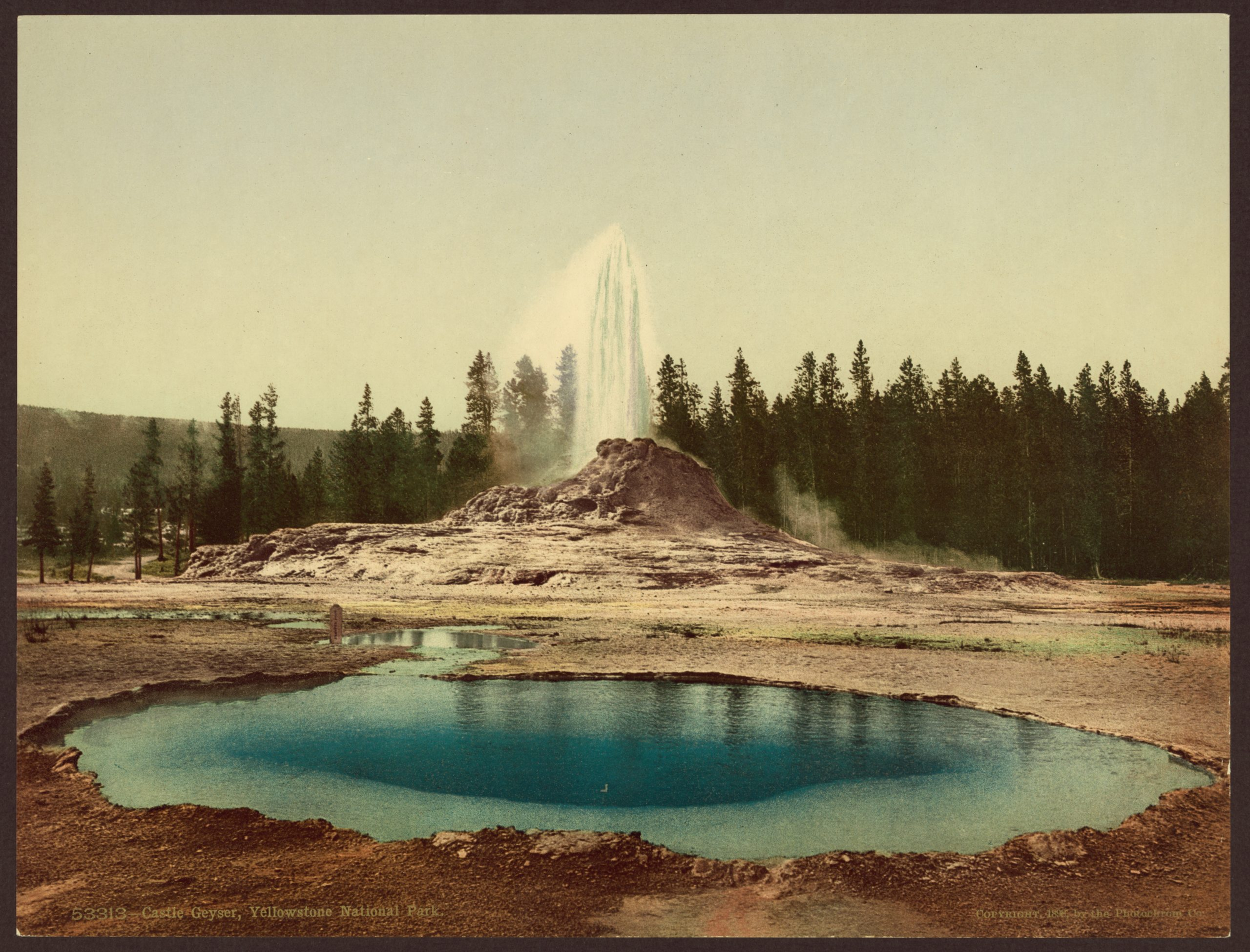
In the winter of 1807 to 1808, Colter crossed what is now Yellowstone National Park on foot. He became one of the first men of European descent to see and report its geysers, hot springs, and boiling mud pots. He later described the place as a land of fire and brimstone. Skeptics who heard the tale dismissed it as another mountain man’s exaggeration and began derisively calling it “Colter’s Hell.”
Later expeditions confirmed every detail John Colter had reported. The land itself would vindicate the teller: the man was no liar.
His life settled into a relentless rhythm: setting traps at night, hiding by day, catching plews, and moving before weather or enemies could close in. He learned the country’s moods, the habits of beaver, and the subtle signs of danger. He survived encounters that would have destroyed lesser men. The accounts that survive describe a man who had grown lean and watchful, capable of covering enormous distances on foot with almost nothing but his rifle and a few traps. He was not yet a legendary man; he was simply answering the demands of the country and of his own adventurous nature.
What Manner of Man Was Colter?
Colter combined Scotch-Irish hardiness with proven reliability. He was hot-headed enough to earn a court-martial, yet valuable enough to be retained by Lewis and Clark. Independent enough to walk away from the acclaim that awaited the Corps in St. Louis, and tough enough to endure long solitary stretches in dangerous territories. He was the sort of man trusted with the hardest tasks because he consistently returned with results. His steady manner and capable bearing inspired trust on sight. When the expedition offered a path back to safety and recognition, he chose the harder road instead. That decision revealed the deeper frame of his character: a man drawn not toward comfort or reputation, but toward the precarious edge where Providence and peril meet.
The Ordeal: Colter’s Run for Life
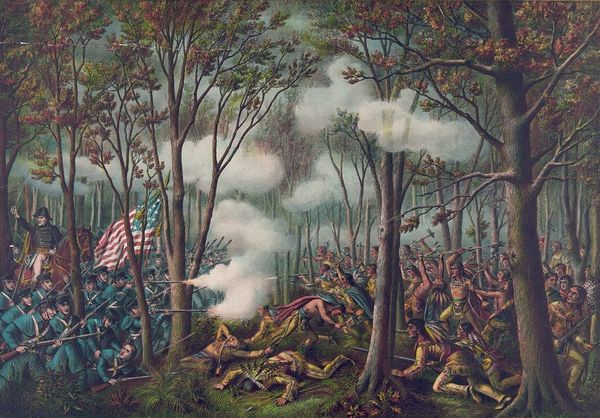
The story that made John Colter’s name immortal began in the spring or early summer of 1809 near the Jefferson River, in the heart of Blackfeet country. Even at that time of year, the high country remained cold and unpredictable, with snow still lingering in the shaded draws and on the higher ridges. Colter was trapping with John Potts, another former member of the Corps of Discovery. Both men understood the danger. The Blackfeet had already made it clear that American trappers were unwelcome on their hunting grounds. Earlier clashes had already bloodied the ground.
The two men were still in their canoe when a large party of Blackfeet warriors appeared on the bank and ordered them ashore. Resistance was hopeless. They landed. The warriors immediately stripped both men naked. Potts, whether from panic or defiance, attempted to resist or flee. He was pelted with arrows, then lanced and clubbed to death. Colter was left standing alone—unarmed, unclothed, and surrounded by several hundred armed warriors on their own claimed ground in the heart of the northern country.
What happened next belongs to both history and legend. According to the accounts Colter later gave, the Blackfeet warriors debated his fate. Some wanted him killed at once. Others, perhaps recalling that he had traded with them before without open treachery, argued for a different end. They gave him a head start of several hundred yards and then turned loose a number of their fastest young warriors to run him down. It was a form of ritual pursuit—a chance for the young men to prove their speed and courage, and for the captive to show whether he was worthy of life.
So Colter ran. Barefoot over broken ground and through thick brush and cactus, he ran through cold that could kill a clothed man. He ran for miles as the warriors closed in behind him. One gained steadily until Colter could hear the man’s breathing at his back. He whirled suddenly, seized the warrior, took his spear, and killed him. Then he ran again: bloodied, still naked, still pursued.
He reached the river—whether the Madison or the Jefferson, accounts differ—and plunged in. He swam downstream and hid inside a beaver lodge or a tangle of driftwood and logs, breathing through a narrow air space while the warriors searched the banks above. They passed so close he could hear their voices. He remained hidden until nightfall, then slipped away and began the long journey to Manuel Lisa’s fort on the Bighorn—some accounts say more than a hundred and fifty miles. He arrived emaciated, naked, and with his feet torn to shreds, but alive.
The men at the fort heard his story and remembered it. Within a short time the tale was moving down the Missouri with every returning trapper and keelboat. By the time Washington Irving and others recorded it decades later, it had taken on the polish of legend. Yet the core remained true: a man stripped of every advantage had outrun death itself through endurance, quick thinking, and an unbroken refusal to quit.
The Blackfeet oral tradition, as recorded in later ethnographic accounts, remembers the event in a different but understandable light. To them, Colter and Potts were intruders and poachers on sovereign hunting grounds whose presence threatened both their resources and their control of the region. The pursuit served as both punishment and warning—a clear message to other American trappers that this land was defended. Frontier conflict was mutual and often brutal on all sides; the Blackfeet were protecting what they regarded as their own in the only terms the frontier recognized. Colter’s survival did not validate their claim to the ground; it merely showed that one determined man could sometimes escape the retribution of warriors who were determined to kill intruders on their territory. Providence, in the movements of peoples and the changing seasons of possession, is rarely simple or tidy.
Return to Settlement and Final Duty on the Missouri
Colter eventually made his way back to the settlements. By 1810 or 1811, he had reached the St. Louis area with enough beaver pelts and experience to purchase a farm. He settled near Miller’s Landing, later known as New Haven, in what is now Franklin County, Missouri, on fertile bottomland along the Missouri River. There he married a woman named Sarah, known as Sally, whose maiden name appears in records as Loucy. They began the ordinary work of building a life together. A son, Hiram, was born to them; some accounts also mention a daughter, Evalina. Hiram would grow to manhood, marry, and father eight children of his own. Many of John Colter’s descendants remained in that same stretch of Missouri country for generations.
For a time, John lived the life of a settled farmer—the mountain man turned husbandman. He collected the back pay and bounty land still owed to him from his service with the Corps of Discovery. The journals and later recollections portray a man who had seen enough of the far country and was, for a season, content with hearth and field.
But the old country would not leave him in peace. In 1812, the United States faced war with Great Britain once more. On the frontier, that meant renewed Indian alliances with the British, the threat of raids, and the need for mobile defense. Nathan Boone—Daniel Boone’s son—raised a company of Mounted Rangers to help secure the Missouri Territory. On March 3, 1812, John Colter enlisted. Nathan Boone knew him and held him in high regard; years later, in 1816, he named one of his own sons John Colter Boone in his honor.
But John’s own service was brief. Colter fell ill with jaundice and died on May 7, 1812, at roughly thirty-seven or thirty-eight years of age. Some sources list a date in 1813, but 1812 is the more commonly accepted year. His body was returned to his wife. Tradition holds that he was buried on a bluff overlooking the Missouri River near New Haven, or possibly in the cemetery of the Fee Fee Baptist Church at Bridgeton. No marker survives with certainty. The man who had lived on the farthest edges of the maps ended in an unmarked grave beside the very river that had carried so many of his kind westward.
He left behind a wife, a young son, a few acres of land, and a story that refused to stay buried.
The Hand of Providence in the Story of Our People
John Colter belonged to a people who still cherished their Bibles as both history and prophecy. His Scotch-Irish forebears had carried the Scriptures across the Atlantic and down the Great Wagon Road, believing that the God of Abraham, Isaac, and Jacob continued to deal with nations as he had in the days of Moses. They did not imagine themselves exempt from the patterns set forth in the Old Testament.
In the book of Deuteronomy, the Lord had instructed Israel concerning the descendants of Esau, who formed the neighboring nation of Edom: “Meddle not with them; for I will not give you of their land, no, not so much as a foot breadth; because I have given Mount Seir unto Esau for a possession” (Deuteronomy 2:5). The same principle is repeated for Moab and Ammon in verses nine and nineteen. God assigns territories to peoples according to his own counsel, and his providence of patriae extends to all nations without favoritism (Deuteronomy 32:8; Genesis 15:16). When he determines that a land shall pass from one people to another, Scripture records it plainly: the Horims were driven out before the children of Esau, the Zamzummims before the Ammonites, and the Emims before the Moabites (Deuteronomy 2:12-22). These were not aimless migrations. They were movements under the hand of Providence.
By the same Spirit, the Lord had spoken over Japheth through Noah: “God shall enlarge Japheth, and he shall dwell in the tents of Shem” (Genesis 9:27). Christian interpreters have long understood this enlargement in two senses. Spiritually, the nations descended from Japheth received the Gospel of the God of Shem and were brought into the covenant people through Christ. Territorially, the same peoples—now bearing the name of Christendom—expanded outward across the earth, establishing churches, laws, and settlements in lands previously held by other tribes and nations. Our fathers saw the Americas as one theater of that enlargement. Not every acre was taken by conquest; much was gained through settlement, treaty, purchase, and the steady pressure of a growing people who believed the land had been opened before them.
Colter and the mountain men who followed him moved across the arrow’s edge of that transition. They were neither the first to hold the ground nor the last. The Blackfeet and their neighbors had possessed the same land under an earlier season of Providence—a patrimony they defended with the natural loyalty any people owes to the inheritance of their fathers. When the Blackfeet pursued Colter and Potts, they acted as men who still regarded those hunting grounds as their own by long possession and by the order of things as they then stood. That claim was real in its time. The displacement that followed was also real, and our people have understood it, in part, as the continuation of the same divine pattern that once moved the Horims and the Zamzummims in Deuteronomy 2. Both truths may stand without requiring us to diminish the courage of the one or the rightful inheritance of the other. God’s providence in history is not required to be simple, nor is it wise for us to pretend that it is.
Yet courage remains a Christian virtue, not a cultural option. Scripture does not treat fearfulness as a private temperament. It places the fearful and unbelieving first among those who “shall have their part in the lake which burneth with fire and brimstone: which is the second death” (Revelation 21:8). The condemnation does not fall on those who feel fear in the face of danger—every man feels it—but on those who allow fear to rule their conduct when duty demands they stand. Colter’s Run, whether embellished in the telling or not, became a frontier parable of the refusal to quit when every advantage had been stripped away. He did not lie down and wait for the spear. He ran until his feet were ruined, fought when the moment came, and reached safety among his own. Scripture honors this pattern: not the absence of fear, but its mastery in the service of higher obligation, including those duties woven into our very nature by our Maker.
The same Bible that condemns cowardice also commands a specific form of piety that modern ears have been trained to disregard. “But if any provide not for his own, and specially for those of his own house, he hath denied the faith, and is worse than an infidel” (1 Timothy 5:8). The phrase “his own” extends beyond the nuclear household. In the Greek it carries the sense of one’s own people, one’s own kin, one’s own ethnos. The same language appears in John 1:11 when it says that Christ “came unto his own, and his own received him not.” The duty to one’s own people is not an optional addition to Christian ethics. It is rooted in the order of creation and reinforced by the explicit command of the New Testament. A man who will not defend his own household when it is under assault has denied the faith in practice, whatever he may confess with his lips.
This duty extends upward to the national fathers. “Honour thy father and thy mother: that thy days may be long upon the land which the Lord thy God giveth thee” (Exodus 20:12). The commandment is not confined to private family relations. It includes the duty to honor those who went before us in the building of the God-given patria—even when their record is mixed, even when they fell short of perfect justice. The modern demand inverts this order. It requires us to publicly dishonor our national fathers, to treat their expansion as America’s original sin, and to teach our sons and our daughters to apologize for the very ground beneath their feet. That inversion is not Biblical. It belongs to the tradition of impious men that Christ condemned when he said the Pharisees made void the commandment of God by their man-made tradition (Mark 7:9–13; Matthew 15:3–6). We are not required to whitewash every act of our fathers. We are required to refuse the demand that we treat them as uniquely and irredeemably wicked while every other people’s defense of their own is celebrated.
These are the categories that still provide the only coherent Christian reading of our history and our present crisis. God assigns lands to nations in his own time and according to his own counsel. He sometimes moves one people across the territory of another. He calls men to courage rather than cowardice. He commands provision for one’s own household and one’s own people. He requires honor to the fathers who went before. Colter’s Run sits inside that framework. So does the task that now falls to us.
Training our People to Run the Race Set Before Us
The body itself belongs to this formation. Paul does not dismiss it: “Bodily exercise profiteth little: but godliness is profitable unto all things, having promise of the life that now is, and of that which is to come” (1 Timothy 4:8). The “little” is not nothing. A man whose body is soft will find his soul harder to summon when the test of mettle arrives. The temple of the Holy Spirit is not strengthened by neglect. Colter did not survive his pursuit because he possessed superior theology in the moment of crisis. He survived because years of hunting, trapping, and walking had already shaped a body capable of enduring what most modern men cannot imagine. That formation was never an end in itself. It was preparation for the God-given duties that would fall to him—duties that included both the defense of his own life and, in the larger story, the opening of ground that would become part of the hard-fought inheritance of a Christian nation.
Fathers can recover this pattern without turning their homes into gyms or their sons into athletes performing for public applause. Begin simply. Run together three or four times a week—not for records or recognition, but for the older reason: to teach the body to suffer and keep moving. Mix steady miles with short, hard efforts up hills. Add a ruck from time to time with a modest load. Let heat, cold, and discomfort do their quiet work of formation. Teach the boys to finish what they start even when their lungs burn and their legs tremble. Give every longer, harder run its proper name: Colter’s Run. Tell the story again as you run it into their legs—the same story of pressing over the crest when every instinct says to stop, building the kind of toughness that carries a man through hard trials.
After the run, while the blood is still hot, open the Book. Read passages on endurance and courage. Memorize a verse or a catechism question together on the walk home. Let the physical effort become the occasion for the spiritual one. The same sons who learn to push through discomfort on the trail will be less likely to fold when the culture demands they apologize for their fathers, retreat from the truths of Scripture, or surrender their inheritance without resistance.
This is not gnostic contempt for the body, nor is it the modern cult of self-improvement. It is the recovery of a simple, Biblical wisdom: the man who can govern his own frame is better prepared to govern a household, defend a people, and endure whatever Providence appoints. So train, Christian man. No matter your current state, you can summon your body to breathe hard. Make it a regular rhythm of both personal and family life. Let your children feel the weight of legacy in their burning muscles and the weight of Scripture in their hearts at the same moment. Over time, these runs become more than exercise—they become a living catechism of courage, directly applying Colter’s example to the formation our time requires.
The Great Inversion of Our Heritage
The same story that once stirred admiration now meets a very different reading in many classrooms and academic journals. Since the middle of the last century, a dominant current in the academy has recast the entire westward movement as an unbroken tale of settler-colonial elimination. Under this lens, every trapper, explorer, and farmer who crossed the Missouri is recast as an agent of dispossession, and every act of Native resistance is recast as pure defense against an original and permanent evil. Manifest Destiny is no longer treated as a sincere, if sometimes overreaching, belief in divine appointment, but as ideological cover for theft, war, and genocide. In the more extreme versions of this narrative, John Colter is no longer a man who survived an ordeal among tribal warriors—he becomes a symbol of intrusion itself.
This reading did not arise in a vacuum. It gained strength after the Second World War, in the same intellectual climate that subjected every Western claim to nationhood and territory to relentless moral scrutiny. It draws on real episodes of broken treaties, violence on both sides, and ecological pressure from the fur trade. It is not wholly fabricated. But it is partial. It erases the long history of intertribal warfare, displacement, and conquest among Native nations themselves. It erases the fact that the Blackfeet, Crow, and others were also expanding or defending territory by the same means available to them. And it erases the Biblical and historical pattern—visible in Deuteronomy 2 and repeated across the ancient world—that nations and peoples have repeatedly displaced one another under the hand of Providence, sometimes as judgment, sometimes as the simple movement of peoples, and sometimes as both.
Our fathers did not pretend the expansion was without cost or without sin on the part of individuals. They did believe, with Scripture in hand, that the Lord who once gave Mount Seir to Esau and then moved other nations across it could also open a continent to a people who carried the Gospel and the common law. That belief is now treated in many quarters as morally equivalent to the worst reported crimes of the twentieth century. The inversion is nearly complete: the men who built the country and institutions we still inhabit are recast as the original oppressors, while the duty to honor father and mother (Exodus 20:12) is set aside when the fathers in view are our own.
We need not choose between portraying the Blackfeet as mere savages or slandering our own ancestors as mere villains. Yet God does require us to reject the total inversion that turns every White pioneer into a criminal and every act of Native defense into unalloyed righteousness. Providence is more complex than the latest academic fashion, and more just than the selective moral ledger now in vogue by anti-European hypocrites.
By God’s hand over history, the gospel has spread not only on Roman roads, but on the sails, rails, and saddles of European explorers, settlers, mountain men, and colonists. The modern tendency to condemn colonization wholesale is, in practice, to condemn Christendom itself along with its providential expansions for the glory of God and the salvation of many souls.
The Satanic Hunt: When American Posterity Becomes the Prey
Colter was stripped of every advantage but the strength of his own frame and sent running for his life. Young Americans now face a similar pursuit in a different way.
Our nation’s posterity are being proverbially stripped—not in a single dramatic moment on a riverbank, but gradually and deliberately across generations. The very institutions their White Protestant forefathers built and preserved for their descendants are being handed over to strangers or hollowed out from within. The career paths that once allowed a man to provide for his own are being narrowed or redirected toward others. The neighborhoods their forefathers settled are being changed beyond recognition, while Americans themselves are being taught that noticing the change is the real offense. The charge of “racism”—applied almost exclusively to White men and women, and almost never to the growing patterns of envy, theft, and murder committed against them—now functions as the modern equivalent of the spear at their backs. Under the accusations of racism and colonialism, their dispossession is justified while any resistance is condemned.
The purpose of a system is what it does. When the dispossession and provocation of Whites in their own God-given patria is treated as background noise, while the noticing of demographic replacement is punished with professional and social cancellation, the system has declared its aim. White American colts are being prepared, in the collective sense, for the hunt.
The response cannot be the faithless withdrawal of the current priestly class—pastors who pass by on the other side while their own ethnic kin are robbed, beaten, and bound on the roadside, then preach multicultural platitudes that enable the next round. Nor can it be the quiet despair that accepts dispossession as inevitable, as if the judgments of Providence must be met with impiety toward one’s own people and place. The response must be Colter’s: stripped of advantage, yet still running; unarmed, yet still dangerous; alone, yet still reaching the fort.
We owe our sons more than slogans or excuses. We owe them bodies that have been taught to suffer and persist, souls that have been catechized in courage rather than in perpetual apology, and a story that shows them that their ancestors were not villains for wanting a future for their own—a place of relative quiet to call home, unprovoked by invading peoples. We owe them the example of a man who, when everything was taken from him, still refused to lie down. Physical training is of some value. Godliness holds value for all things. The two together—a body prepared and a soul anchored—are the minimum equipment for the race now set before us.
The Blackfeet defended their place when it was still theirs under the order of Providence. Our fathers took up the ground when that order shifted toward Christendom. Both peoples belonged to their season under Heaven’s righteous watch. The present task belongs to ours: to stop apologizing for the inheritance, to stop surrendering it without a fight, and to prepare the next generation to run when the pursuit comes—not as cowards marked for the lake of fire, but as men who still believe that the Lord who enlarged Japheth can also preserve a remnant that refuses to vanish.
“I will lift up mine eyes unto the hills, from whence cometh my help.
My help cometh from the Lord, which made heaven and earth.”
—Psalm 121:1-2
The Charge to Run and Reclaim
Fathers, begin tonight. Take your sons on their first Colter Run. Tell them the story without apology or embellishment. Read them the Scriptures that formed their great-grandfathers in the land their Maker had given them. Let them feel the burn in their legs and the weight of their inheritance in the same hour.
Young men, the fort is still there. Your people still await your return. The river can still be crossed. The tale remains worth telling because it remains true: a man stripped of every advantage can still reach home if he refuses to quit. The hunt upon America’s posterity has already begun, and many of your advantages have been taken from you. Run anyway.
The same God who assigns territories and moves nations across them has not abandoned his throne. Piety remains our duty; the final ordering of history remains his. He still raises up deliverers from unlikely places. The mantle of this nation was laid upon the descendants of White Protestant men whose courage and conviction opened the New World for the glory of Christ.
Though we have been stripped of much that was ours, though we are pursued by forces hostile to both our faith and our people, and though we are being dispossessed of the inheritance our fathers secured, our duty remains clear: to train our sons, to tell them the truth, and to run—fighting when necessary—with courage and endurance until we reclaim every corner of the inheritance our forefathers secured for their posterity under the hand of Almighty Providence.
ATTENTION READER:
American Mantle exists for the renewal of godliness and righteous power in America. We often go where others rarely dare, directly addressing taboos on faith, ethics, politics, and history.
We are Americans by blood and soil. Our own forefathers conquered and cultivated our homeland, and through great faith, bold strategy, and statesmanship secured the blessings of liberty to themselves and their posterity. We are their posterity, and we resolve to follow them. Join us in this mission.
Donate now to support us.