Great Americans: Samuel Francis and the Nature of Power
Most political commentators focus on elections, legislation, and the public drama of modern politics. Francis was interested in something deeper: the structure of power itself.
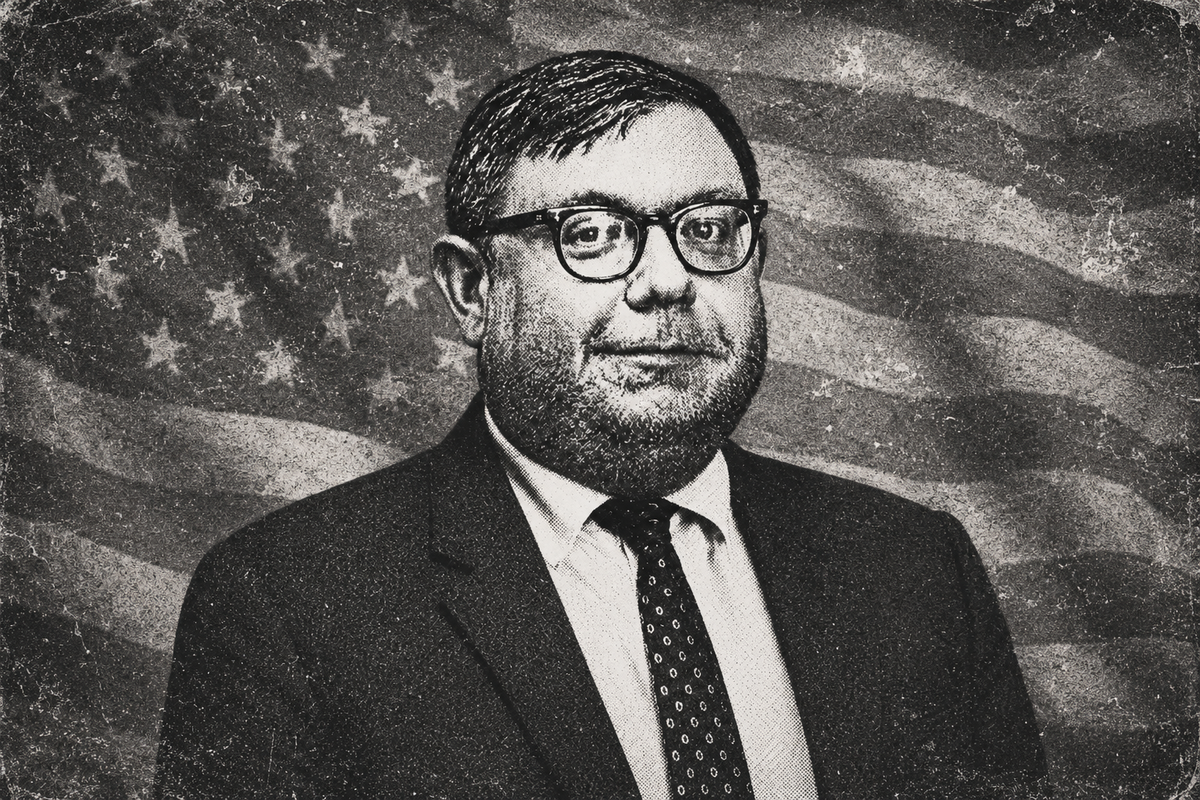
Samuel Francis (1947–2005) was one of the most original political thinkers produced by the American Right in the late twentieth century. Journalist, historian, political theorist, and social critic, Francis devoted his career to a question that lies beneath every political controversy and every ideological dispute: who rules?
Most political commentators focus on elections, legislation, and the public drama of modern politics. Francis was interested in something deeper. He sought to understand the structure of power itself. Why do certain institutions consistently move in the same direction regardless of elections? Why do elites across government, corporations, universities, media organizations, and cultural institutions often seem to share common assumptions? Why do ordinary citizens frequently feel powerless even in societies that are “democratic”?
The answers he developed emerged from a creative synthesis of two very different thinkers: James Burnham and Antonio Gramsci. Burnham provided Francis with a theory of elite power. Gramsci provided him with a theory of cultural power. By combining them, Francis developed a penetrating analysis of modern political life.
The Student of Power
Francis was born in Chattanooga, Tennessee, in 1947. He attended Johns Hopkins University and later earned a doctorate in modern British history from the University of North Carolina. After moving to Washington, he worked at the Heritage Foundation, served as a legislative aide to Senator John East, and eventually became an award-winning editorial writer and syndicated columnist for The Washington Times.
His career placed him inside the institutions of the American conservative movement at a moment of great optimism. The Reagan Revolution appeared to demonstrate that conservatism was ascendant. New think tanks, publications, political organizations, and media outlets were flourishing. Many conservatives believed they were winning.
Francis was less certain.
Working within Washington exposed him to realities that were difficult to reconcile with the triumphalist mood of the era. Elections changed officeholders, but the permanent institutions of government remained. Cultural institutions continued moving in the same direction regardless of electoral outcomes. Bureaucracies expanded exponentially. Administrative rules and laws replaced legislation. Universities grew more ideologically uniform. Big media organizations became increasingly influential in shaping public opinion.
The more Francis observed these developments, the more he became convinced that conventional political categories failed to explain what was happening. The thinker who offered the most convincing explanation was James Burnham.
Burnham and the Managerial Revolution
Burnham's great insight was that the twentieth century had produced a new ruling class. In The Managerial Revolution (1941), Burnham argued that the traditional categories of capitalism and socialism were becoming obsolete. Ownership was becoming less important than control. Real power was increasingly exercised not by shareholders, entrepreneurs, or elected officials, but by managers.
These managers included bureaucrats, administrators, corporate executives, planners, military officers, technical experts, and institutional professionals. Their authority derived not from ownership but from their positions within large organizations.
Modern societies depended upon such organizations. Giant corporations, national governments, universities, media conglomerates, and administrative agencies all required a specialized class capable of directing and coordinating complex operations. As populations grew, these institutions expanded as did the influence of those who managed them.
Burnham's companion volume, The Machiavellians, supplied the second half of the equation. Drawing on thinkers such as Machiavelli, Pareto, Mosca, and Michels, Burnham argued that every society is ruled by an elite minority. Democracy does not abolish elites. It merely changes their composition and methods of recruitment.
Francis absorbed these ideas and proceeded to expand and modify them.
He came to believe that the central political fact of modern America was the emergence of what he called a managerial regime. Beneath the formal structures of constitutional government existed a network of interlocking institutions dominated by a managerial elite that exercised enormous influence over politics, economics, culture, and public opinion.
This elite was not a conspiracy. It did not gather in secret rooms to coordinate its plans. Rather, it was a social class. Its members attended similar universities, worked within similar institutions, shared similar assumptions, and possessed common interests. Like all ruling classes throughout history, they tended to view the world through a common lens.
Yet Francis believed Burnham's theory, while indispensable, remained incomplete. While Burnham explained who ruled, he did not fully explain how they maintained their rule. Burnham assumed managerialism would morph into authoritarian politics similar to pre-WWII Germany or the Soviet Union. But it took a much different path in the West and the Anglosphere. To understand that, Francis turned to an unlikely source.
Gramsci and Cultural Hegemony
Antonio Gramsci was an Italian Marxist imprisoned by Mussolini during the 1920s and 1930s. Writing from prison, Gramsci sought to answer a question that had troubled Marxists for decades. If economic interests and class solidarity determine political outcomes, why had socialist revolutions failed to occur in the advanced societies of Western Europe? His answer was cultural hegemony.
According to Gramsci, ruling classes maintain power not merely through force or economic control but by shaping the cultural assumptions through which people understand the world. Schools, churches, universities, newspapers, literature, entertainment, and other institutions help establish what society regards as normal, legitimate, and morally acceptable.
When a ruling class captures those institutions of cultural dissemination, it achieves a narrative hegemony and its values become common sense. People obey not simply because they are coerced but because they have internalized the assumptions that justify the existing order.
Burnham, who was coming out of Marxism at the time he wrote the Managerial Revolution, had focused primarily on economic and political power. Francis believed that modern managerial elites exercised power through culture as well. Universities, media organizations, foundations, educational institutions, and entertainment industries did not merely reflect elite preferences, but helped create and reinforce them. The managerial elite therefore ruled not only through bureaucratic administration but through the shaping of public consciousness.
Francis's great innovation was to combine Burnham's elite theory with Gramsci's theory of cultural hegemony. While managers controlled the institutions, it was cultural hegemony that legitimized their control through the inculcation of an ideology or social formula that emphasized the plasticity of human nature, the primacy of reason and scientism, and egalitarianism (i.e., liberalism).
Together they formed a comprehensive system of power.
Soft Managerialism
This insight led Francis to modify Burnham in another important respect. Burnham had often expected managerial society to evolve toward openly authoritarian forms. Looking at Stalin's Soviet Union, Hitler's Germany, and other twentieth-century regimes, he believed managerial power naturally gravitated toward centralized coercion.
But the advanced democracies of the West had developed under different historical conditions. Liberal traditions, mass consumption, electoral politics, and constitutional norms made overt authoritarianism unnecessary. The managerial elite could often achieve its objectives through softer means.
Instead of relying primarily on force, it could more gently impose its worldview through education, media narratives, professional credentialing, bureaucratic regulation, and cultural pressure. It could shape the range of acceptable opinion and define the boundaries of respectable discourse. Individuals who challenged dominant assumptions need not be imprisoned, they could simply be excluded from influential institutions.
This was what Francis meant by a "soft" managerial regime. Power remained real, but it was exercised through subtler mechanisms than those envisioned by earlier theorists.
The Revolt Against the Managers
Francis did not believe this system would remain stable forever. One of his most influential contributions was his identification of what he called "Middle American Radicals." Borrowing from the sociologist Donald Warren, Francis described a large segment of middle- and working-class Americans who felt increasingly alienated from elite institutions.
These Americans were neither wealthy nor poor. They worked, paid taxes, raised families, and maintained local communities. Yet they often felt that the institutions governing society no longer represented their interests or values.
Francis believed these groups possessed the potential to challenge managerial dominance if they had the right leadership and direction from some rising elite that would challenge the current consensus. Long before the rise of contemporary populism, he argued that a widening gap was emerging between national elites and ordinary citizens.
Many of the political upheavals that followed his death—from growing distrust of institutions to populist revolts against establishment parties—have led observers to revisit these arguments.
Francis's Legacy
Francis remains a “controversial” figure. His later writings on race and identity placed him beyond the boundaries of acceptable opinion for most mainstream institutions and contributed to his political isolation and exile from the mainstream Right. Yet his larger significance lies elsewhere.
Francis offered an ambitious attempt to understand power in modern society. Drawing upon Burnham, he explained the rise of a managerial ruling class. Drawing upon Gramsci, he explained how that class maintained cultural authority. Together these insights formed a powerful framework for interpreting modern politics.
Francis forced readers to confront questions that ostensibly self-governing societies often prefer to avoid. Who rules? How is power maintained? Why do institutions behave as they do? And why do growing numbers of people feel estranged from the organizations that govern them?
These questions animated Francis's career. They continue to animate political life today and for that reason, Samuel Francis deserves to be remembered not merely as a journalist or controversial polemicist, but as one of America's most important students of power.
 Scot Olmstead
 Scot Olmstead
ATTENTION READER:
American Mantle exists for the renewal of godliness and righteous power in America. We often go where others rarely dare, directly addressing taboos on faith, ethics, politics, and history.
We are Americans by blood and soil. Our own forefathers conquered and cultivated our homeland, and through great faith, bold strategy, and statesmanship secured the blessings of liberty to themselves and their posterity. We are their posterity, and we resolve to follow them. Join us in this mission.
Donate now to support us.