
Vine and Iron
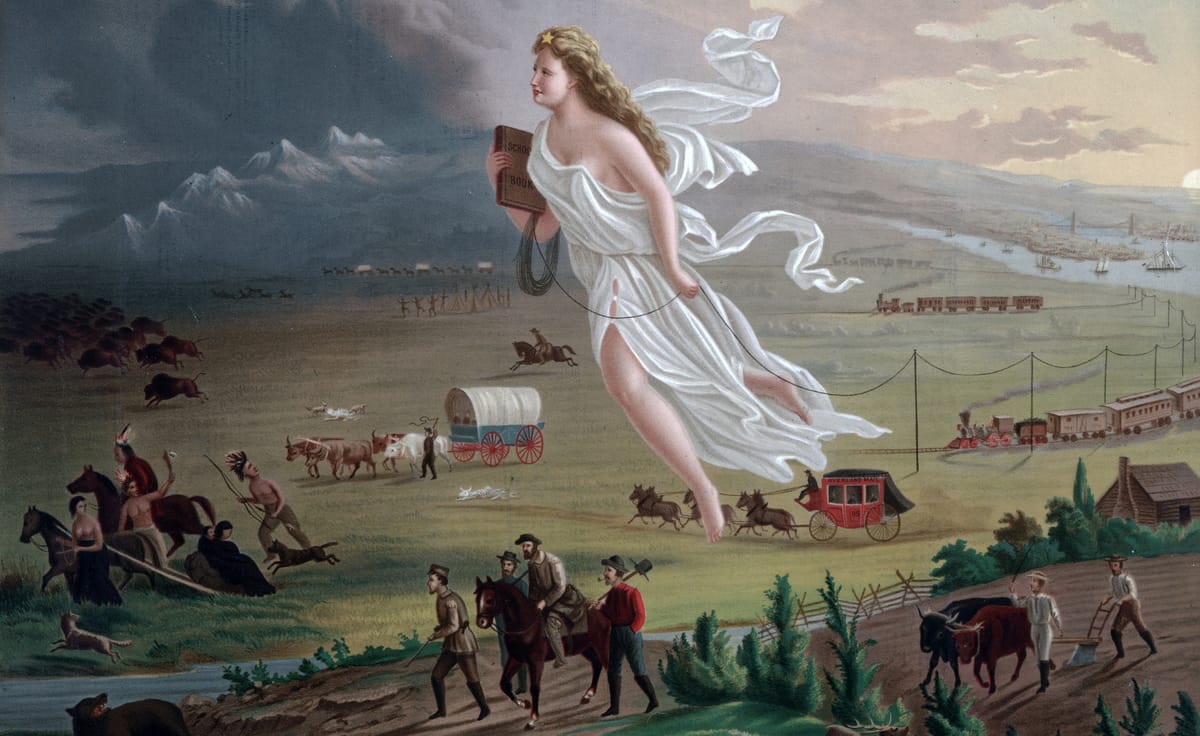
The American Right stands at the edge of a dying order and the dawn of the Machine Age, where power belongs to whoever commands the technological stack in service of a real ethnocultural nation.


Summary
Introduction
For the better part of two generations, the American Right has coasted on assumptions belonging to a world that no longer exists—assumptions minted in the afterglow of the Cold War, when it became fashionable to believe that political economy could be abstracted from anthropology, that national identity could be reduced to procedure and creed, and that technology would function as a neutral catalyst inside a stable cultural environment. Dubious at their inception, these assumptions are now outright impediments in an age when sovereignty runs through computational infrastructure, demographic engineering, and liberal-managerial systems that operate as much through cultural manipulation as through law. Conservatives and the ostensible Right still speak as if the United States were governed by a straightforward constitutional order staffed by representatives accountable to an informed electorate, even as the central levers of power have migrated into domains absent from civics texts: data centers, model weights, supply chains, global capital flows, and a class of administrators and technates increasingly detached from—and often hostile to—the historic American people.
The disconnect between surface and substance is now stark. On the surface, the forms of electoral politics still persist—candidates wave, pundits bark, activists canvass—as though the twentieth-century frame still described the system underneath. In substance, we inhabit a country—part managed republic, part imperial power—seated atop a machine lattice: a network of agencies, corporations, non-profits, universities, and AI-platforms unified not by conspiracy but by a shared ideology of managerial cosmopolitanism. The lion and the fox, to use Machiavelli’s taxonomy, have not vanished; they have learned to code.
Coercion still exists, as those at Waco, Ruby Ridge, or in more recent showpiece prosecutions learned; but manipulation is preferred—the bread and circuses of consumerism, media, entertainment, and now the personalized feed, where “recommended for you” prompts arrive from real people, bots, and a litany of influencer personalities, some of whom we've discovered, thanks to X's new geolocation exposures, do not reside in the country or among the peoples they claim to favor. A regime that can induce a population to police or placate itself, where alien actors pose as native champions and where Western heirs are reduced to bastard living, has little need for open terror.
In such a system, the old Right’s vocabulary—small government, big government, Reaganite, conservative, progressive, free markets, statism—obscures more than it reveals. We are well past the point where debates over marginal tax rates or the size of the federal register could be mistaken for the era’s central conflicts, especially in a country importing each year a population larger than nine of its states—a bipartisan consensus if ever there was one. The deeper question of our age is whose anthropology and whose civilizational project will be etched into the architectures of compute, finance, identity, and territorial order that now structure power. On this question, the official Right has said little of consequence. It quibbles over policies inside a framework it neither designed nor understands, and when confronted with the rising machine—an infrastructure that sorts, predicts, and shapes behavior—it oscillates between boosterism and superstitious dread.
A real Right would begin elsewhere. It would begin with man, nation, regime, and machine, not as slogans but as realities. It would ask who the American people actually are, not who Obama or Ramaswamy said they were supposed to be; what kind of life they are entitled to lead in their own land; what economic and technological order sustains such a life; and what statecraft protects it on a rough, multipolar planet. It would recognize that present-day establishment conservatism—neoconservative when fashionable, populist when useful, optimistic whenever dollars demand—is not an ally in this effort but part of the machinery that managed and normalized our current decay. And it would view the Machine Age not as a fleeting gadget cycle but as the terrain upon which any serious Right will either reconstitute itself or perish. As we enter this new era, the central question is whether the American Right can develop a political anthropology and civilizational strategy adequate to the transformed landscape. So far, the signs are mixed.
The Managed Republic and the Ascendant Machine
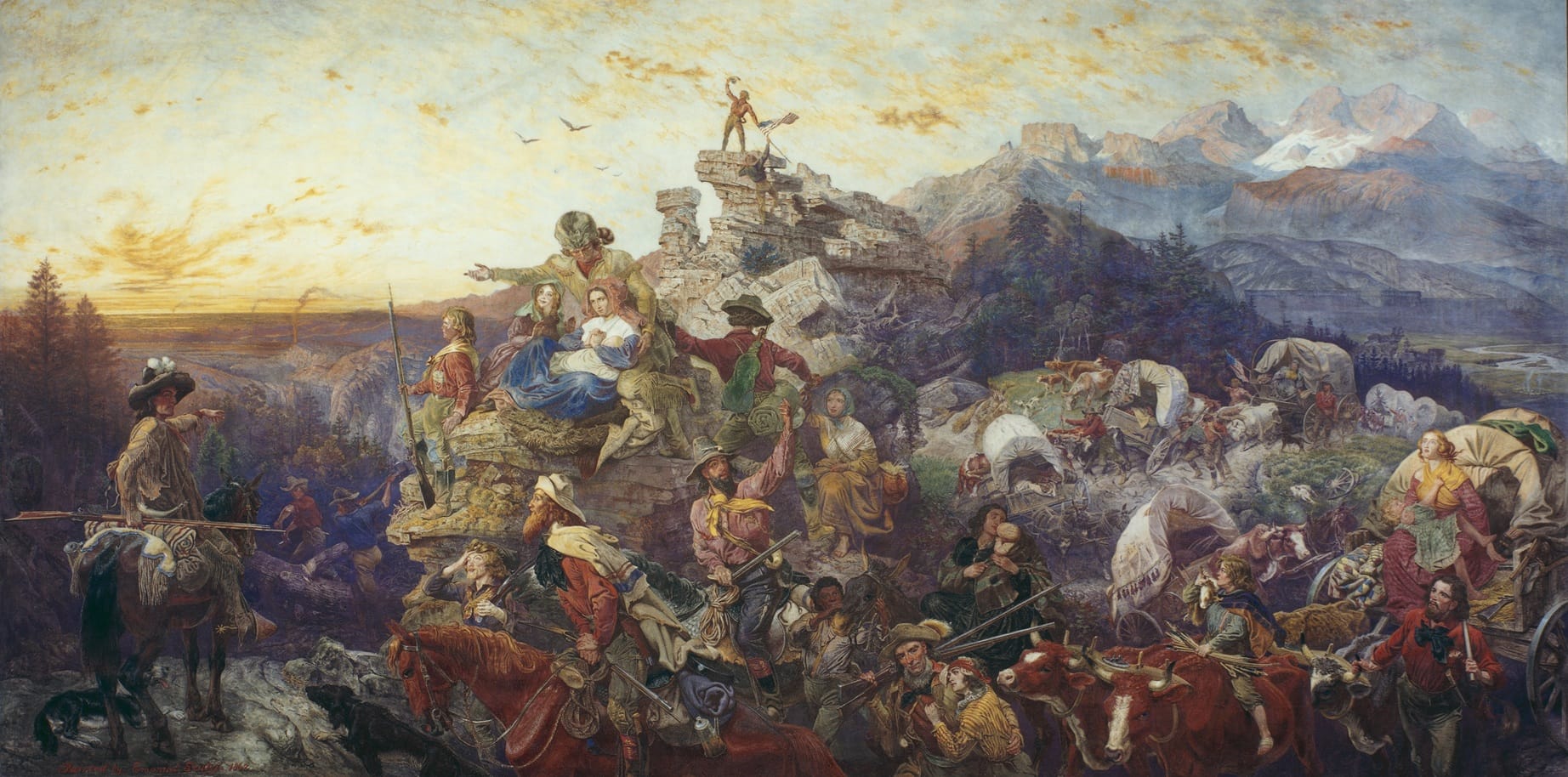
The United States today resembles less a classical republic than a managed system, in which elections function as rituals of consent while the fundamental parameters of policy are set elsewhere. Monetary policy, trade agreements, immigration flows, cultural norms, and now even speech boundaries are framed not by popular deliberation but by a constellation of institutions united by an ideology of managerial cosmopolitanism. The Right is not wrong to call this a “regime,” though it rarely musters the discipline to define the term. It is ruled less by conspiracy than by class consensus: individual autonomy in private life, global integration in economic life, therapeutic supervision in social life, and technocratic governance in public life.
In the twentieth century, this class relied on manipulation more than force. Mass media, public schooling, entertainment, and consumerism were the dog and crook that kept the flock within bounds, and for a long time they sufficed. Dissenting voices could be ignored, neurotically caricatured, or absorbed. Even the bomb-throwing radicals of the 1960s were not met with overwhelming repression; they were scolded, occasionally arrested, and eventually hired. It was efficient. It was cheap. And it preserved the indispensable illusion that the system tolerated pluralism.
That arrangement began to fray once communication and coordination tools slipped partly out of the regime’s hands. The fax machine was a minor nuisance; the internet and social platforms were something more serious: a frontier where alternate narratives and identities proliferated outside regulated channels. For a time, the Right congratulated itself, assuming decentralization of information would tilt in its favor. It did not consider that its own intellectual impoverishment or internal capture would leave much of this terrain to be colonized by spectacle, conspiracy, and impotent anger rather than by coherent counter-elite formation.
We have now entered the next phase: the Machine Age. Artificial intelligence systems do not merely transmit information; they judge, sort, summarize, anticipate, and nudge. They are "agentic." They stand between populations and reality, filtering what is seen and what is buried, framing the normal and the unthinkable. More importantly, they are woven into the decision-making organs of state and economy. Risk models shape who receives loans or is flagged for scrutiny; predictive policing models shape enforcement priorities; content moderation models shape what the public may say; strategic models shape war-gaming and resource allocation. These systems are often designed and maintained by the same managerial class that presided over the dissolution of the historic American nation.
The Right’s response has been muddled. It senses these technologies are instruments of control, yet cannot resist them as consumers or as aspirant elites. Some retreat into Luddite posturing; others embrace the tools as toys or business opportunities, imagining that “neutral” technology will lean right once “bias” is removed. Both positions miss the point: the machine is not neutral. It embodies the anthropology and aims of its master. It can be steered toward the interests of a particular people, but only if that people possesses coherent self-understanding and the institutional capacity to impose it upon the technological stack. At present, it does not.
What the Right does possess, in abundance, is the temperamental reflex displayed by figures like Matt Walsh and, on the opposite pole, the agrarian retreat voiced by others like C. Jay Engel.
Walsh is not wrong to sense tectonic change; he is wrong to treat that sense as a stage for theatrical anathema rather than strategic thought. His laments about “the last truly literate generation,” the annihilation of creative fields, and AI “genocide” against art are mood, not analysis—a howl of cultural panic that envisions technology as curse rather than tool. This is beautiful-loser conservatism in its pure form: maximal rhetoric, minimal program. It demonizes tools while leaving untouched the men who own the fabs, write the models, and decide which populations will be displaced or preserved. The regime could scarcely ask for a more useful opposition than a Right that screams “dystopia,” rallies its followers into an impotent moral spasm, and then returns them, exhausted and aimless, to the very platforms and institutions it has just damned.
Engel represents the complementary impulse: not thunder, but resignation. If the Machine is inevitable, he suggests, one must “get out now,” buy land, and shelter one’s progeny. There is wisdom in acquiring soil and tools, and the Hard Right must prize land and production, as figures like Aarvoll (Eric Orwell) demonstrate. But as political anthropology, this is exit masquerading as strategy. It assumes the machine lattice governing finance, information, logistics, and force can be ignored from the back forty. Meanwhile, the managerial class calmly consolidates control over compute, chips, platforms, and law—territory Walsh decries and Engel retreats from, yet neither confronts.
A serious Hard Right cannot afford Luddite wailing or agrarian cope. It must do what earlier elites did with mills, railroads, and production lines: seize new instruments and infrastructure, bend them to the service of a particular people and their future, and deny them to those who would rule that people out of existence.
What makes this moment uniquely volatile is the accelerating collapse of the Liberal Mythos—the post-war catechism of egalitarianism, deracinated individualism, borderless commerce, and the fantasy that creed and procedure could bind together a nation undergoing the Great Replacement. For decades, that mythos survived in an expanding citadel of centralized media, elite gatekeeping, ambiguous pleas for human rights, and a cultural monopoly over narrative formation. Social media detonated that citadel. Ironically, it is tech, specifically the internet—first through blogs, then through forums, then through TikTok, X, Instagram, Rumble, podcasts, and algorithmic micro-realities—which has dissolved the old narrative scaffolding faster than the regime can replace it.
Gen Z, drenched from childhood in the algorithmic churn, has not inherited the pieties and priors that sustained Boomer liberalism or even the civics-book patriotism of Gen X. What it has inherited is a new frontier: a digital wilderness crowded with fragments of suppressed history, alternative ethnocultural identities, and a simmering intuition that the official story is false. Millions feel the floorboards of the old order softening beneath them, and the resulting foreboding—half dread, half opportunity—is the metapolitical air of the age. In this liminal terrain, where old legitimacies die before new ones are born, the rising Machine is not just a tool of the ruling class but a revolutionary battlefield on which successor narratives, successor elites, and successor polities will emerge.
The Real Nation and the Anthropological Void
Political anthropology is where the crisis of the American Right becomes most acute. It is one thing to criticize globalism, mass immigration, and cultural subversion; it is another to assert what the American nation is, what it is not, for whom the state exists, and who its political enemies are, foreign and domestic. For half a century, the Right has been trained to describe America as an “idea,” a “proposition,” or a “creed,” as though nations were conjured by abstractions rather than formed through history, faith, and blood. The neoconservatives were simply the most self-conscious exponents of this view. Their pseudo-nationalism invoked an abstract “national greatness” while repurposing the American state as the enforcement arm of a global order defined by markets and managerial ideology.
Real Rightists dissected that counterfeit nationalism with precision: an instrumental doctrine cloaking sectional and class interests in patriotic language. It championed a centralized, “energetic” state to batter down regional and organic identities, and it deployed universalist rhetoric to justify expansions of power that served new elites rather than the old nation. That this doctrine has migrated from the editorial offices of National Review and now circulates freely in the bloodstream of establishment conservatism and the White House only underscores how little of the real nation’s substance the establishment Right can defend.
The real nation is not an idea. It is the historic American people: overwhelmingly of European descent in origin, formed by Protestant and then broader Christian confession, hardened by frontier and war, tempered by a moral code that took sin seriously and did not confuse license with liberty. Its culture grew from the household and congregation, the town and region, the farmer, artisan, and manufacturer; it recognized hierarchy without dismissing dignity and saw the future not as a blank canvas but as a trust owed to posterity. That nation still lives, though its confidence has been shattered and its unity deliberately eroded.
To say this is not to indulge in some fictional romanticism, as critics hasten to accuse. It is, first, to own history itself; second, to honor our fathers; and third, to acknowledge that all functioning polities rest on an ethnocultural core that shares memory, expectation, and a sense of common fate. Remove that core, or convince it that its very existence is illegitimate, and no amount of constitutional recitation will keep the structure standing. The "American" ruling class understands this very well in practice, which is why it devotes such energy to glorifying immigration, pathologizing the founding stock, and multiplying identities that fragment the majority into mutually suspicious shards. What it cannot quite permit is a candid, unapologetic articulation of American ethnocultural continuity.
Conservatism, having internalized the moral vocabulary of its enemies, flinches at such articulation, or, with its enemies, denounces it as fascist and racist, and manically brands its proponents as neo-Nazi bigots, demonstrating its axial spine is little different than liberals and leftists. Conservatism mouths slogans about “values,” “the Constitution,” and “Judeo-Christianity,” and it celebrates an abstract “West” all while it retreats from—and oftentimes actively endangers—the actual people who built and defined it. Small wonder, then, that it proves incapable of resisting forces that erase that people through demographic replacement and cultural delegitimation. A movement embarrassed by its own ethnocultural base and history will not defend that base nor its history when defense becomes costly.
Christian Race Realism by Michael Spangler
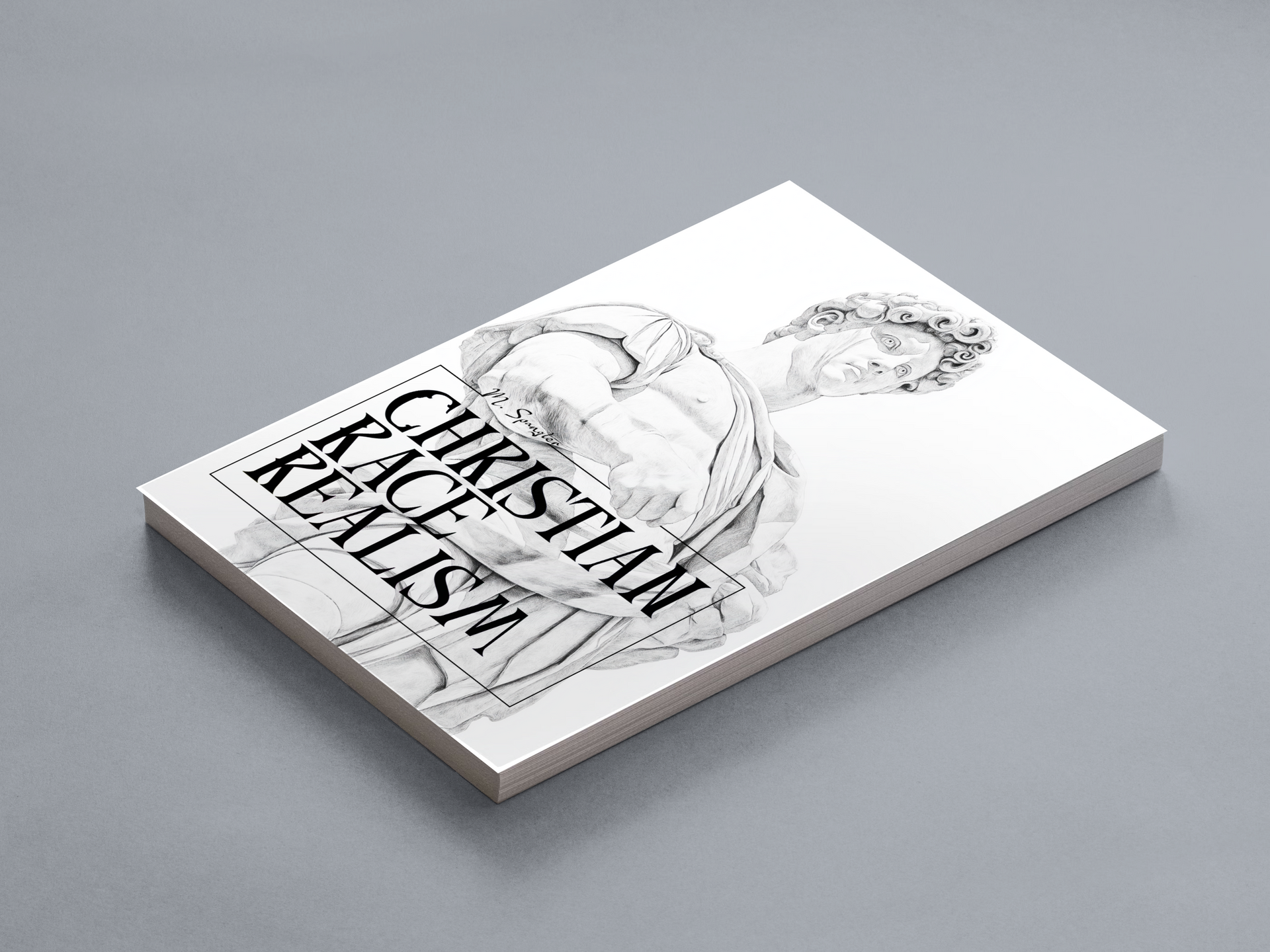
Michael Spangler defines and defends race realism from a Christian perspective, drawing on nature, Scripture, American history, and experience.
Economy, Household, and Machine
The economy was made for man, not man for the economy. If anthropology is the root, economy is the branching system that either feeds or starves it. Here again, the Right’s errors are both conceptual and historical. It has accepted the liberal fiction that “the economy” is a neutral zone best left to self-regulating mechanisms, insulated from political and cultural concerns. In practice, this has meant ceding the vital organs of national life to transnational corporations and financial institutions whose loyalties are to shareholders, indices, and ideological fashions, not to any particular people.
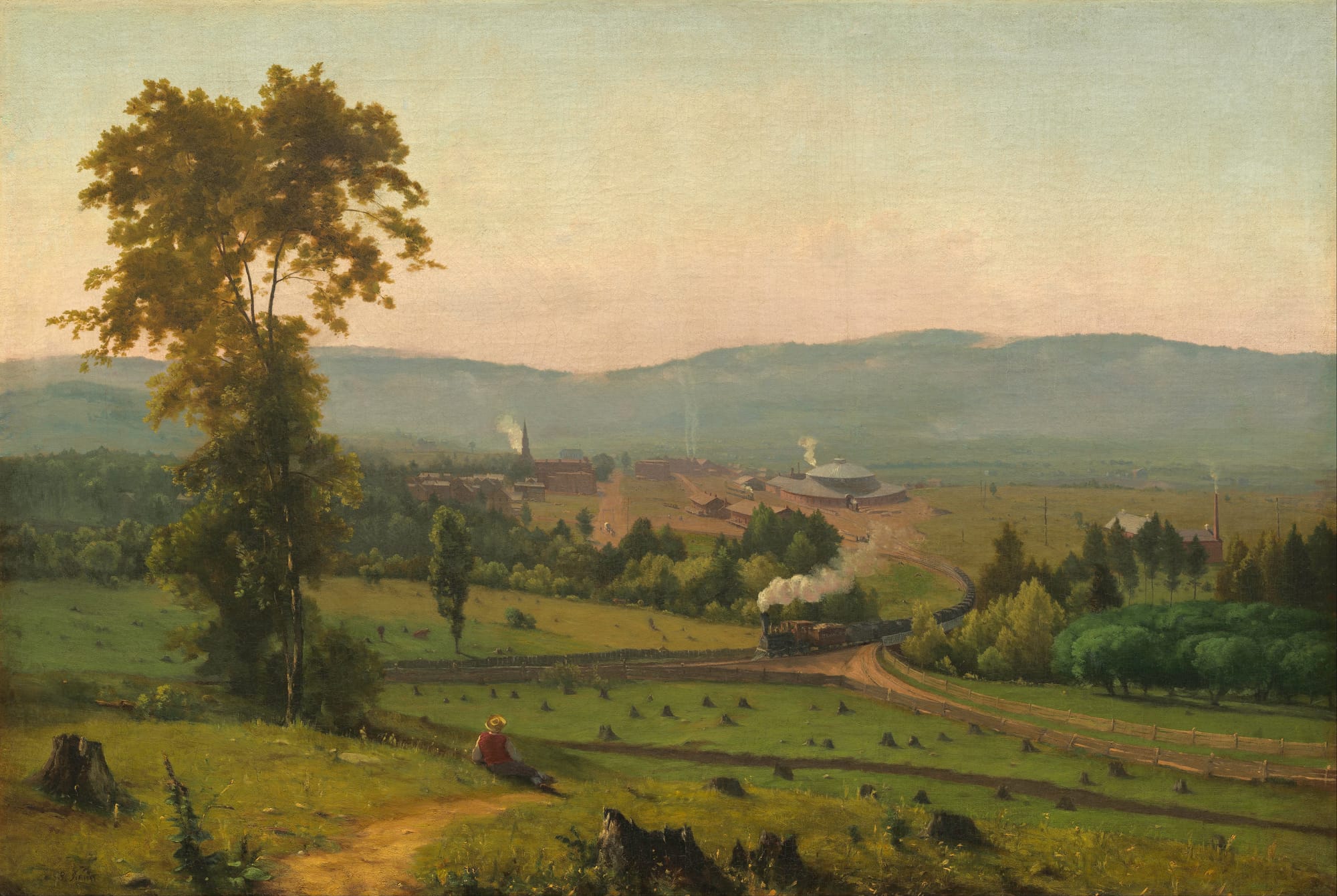
The consequences are visible everywhere. Deindustrialization, once dismissed as inevitable, left entire regions structurally unemployed and culturally destabilized. The closure of steel mills, coal works, and factories severed intergenerational bonds, hollowed out towns, and extinguished informal networks of neighborliness and moral expectation enforced by familiar faces. Addiction, family breakdown, falling fertility, and political despair followed. Yet conservative discourse, trained on marginal tax rates and impersonal priors, greeted these developments with a shrug or with cheerful lecturettes about “creative destruction.”
Hamilton's project in Paterson, New Jersey poses an instructive counterpoint. He did not treat industry as a mere profit center but as armament for independence and a school for republican character. The mills at Paterson were instruments of sovereignty. Today’s Right, by contrast, champions a “free trade” that renders the country dependent on rivals for pharmaceuticals, electronics, and manufacturing, and it calls this treason to national independence “orthodoxy.”
The Machine Age deepens the stakes. When AI systems and robotized production lines displace traditional labor, the question is not simply, “What jobs will replace the old ones?” but “What form of life will these people have?” and “Whose purposes will these machines serve?” Market abstractions cannot answer this, because the market is now intertwined with regime ideology and foreign industrial strategy, and the market is no political actor. If America’s compute capacity, chip fabrication, and AI application are controlled by a handful of firms with global obligations and anti-majoritarian cultural commitments, then economic policy becomes indistinguishable from dispossession.
A sane Right would approach the new technologies as Hamilton approached water power: as resources to be captured, commanded, and domesticated for the benefit of the nation’s core households and as strategic tools of asymmetric power. It would think first of how AI can reinforce family enterprises, regional agriculture, and small-scale manufacturing; how machine labor can streamline existing work or free men for higher callings within a rooted life; how computational power can insulate the distinct American people from foreign leverage and domestic sabotage. It would not imagine that such outcomes will emerge spontaneously.
 Dark Donnie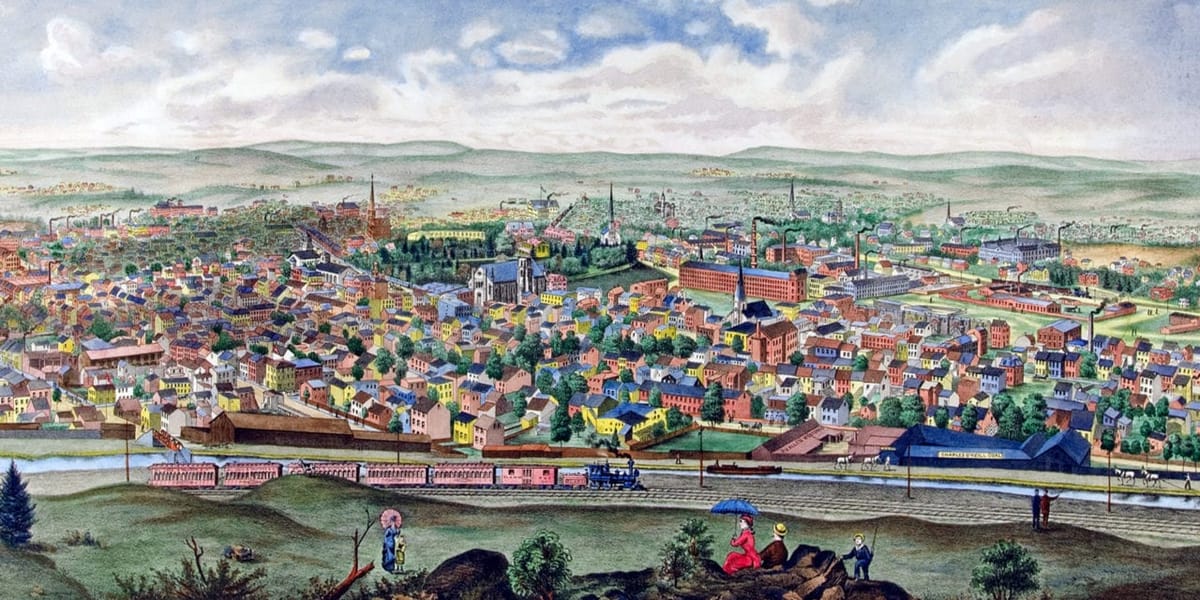
Aesthetics, Enablers, and Pedagogy
The outlines of a revived American imagination already lie within our own history. Rome carved its victories into stone; the early Republic printed its creed onto broadsides and ballots; Henry Ford turned the assembly line into a civic mythos, presenting industry not as commerce alone but as the disciplined expression of a people’s continuity and character; the murals of the WPA and the Norman Rockwell covers that defined mid-century sentiment fused aesthetics with nationhood. AI places similar powers within reach again, allowing a single workshop—or even one man—to generate what once required a studio and a treasury: narrative shorts that revive forgotten civic myths, animated frescoes that compress centuries into seconds, music that fuses folk memory with modern form, and a visual grammar capable of restoring continuity to a fractured people. The crime is not that the tools are dangerous; the crime is that the Right uses them chiefly for snark, parody, and shock rather than for civilizational communication. Rome would have known what to do with these machines. So did America, once.
A similar failure of imagination distorts the Right’s view of the material enablers that make aesthetic or technological power possible. AI is not conjured from the ether; it is a pyramid of land, energy, logistics, capital, cooling, and compute. It is hyperscale facilities rising on the interior; substations built to feed them; fiber corridors trenched across the continent; chip fabs consuming water the way medieval monasteries consumed manuscripts. The question is not whether small towns can host a few GPU clusters—though some will—but whether any faction right of center can articulate a large-scale institutional vision capable of drawing capital, talent, and long-horizon investment. Influence in the Machine Age goes not to dabblers but to those who can sketch a future, persuade backers to underwrite it, and build the physical and digital architecture through which populations must move. The American Right once knew how to operate at that scale—railroads, telegraphs, rural electrification, automobiles, aerospace—but it has forgotten. AI will reward those who remember that power is infrastructural.
Education follows the same principle. One does not need a study to observe the obvious: a child armed with adaptive tutors, personalized curricula, and abundant machine feedback can advance at a velocity unimaginable in the industrial-era classroom. What matters is not the datapoint but the civilizational implication. AI turns education into a force multiplier for any group capable of organizing parental discipline, shared intellectual norms, and a coherent pedagogical aim. Machine-guided instruction can rebuild apprenticeships, reinforce trades, accelerate STEM, revive languages, and tailor humanities instruction to regional history or communal identity. The bottleneck is not the tool but the will: a population that cannot define what it wants its children to become will not use new instruments to shape them, and one that mourns the tools as regression will play second-string to those who do not. The Machine Age does not erase pedagogy; it augments it.
One can sketch, without strain, a different civilization growing inside the shell of the current one: a Right that develops its own visual grammar, not to debase but to elevate—reels that render Plymouth Rock, Valley Forge, Manila Bay, and Main Street with a recognizable style; production houses that treat Americana as a sacred heirloom, not a costume rack; consortia that take positions in energy and compute as long-term national endowments rather than hedge-fund plays; and a republic of study in which machine tutors carry a teenager from Caesar’s Latin and Madison’s prose to frontier engineering in a single course of training. This is not a gadget fantasy. It is what a serious people would already be attempting if it believed it had a future worth the effort and the leaders to forge it. The present order plainly does not; it coasts on inertia and borrowed iconography. If it collapses, it will not be because history “turned” against it, but because it could no longer be bothered to build. A Right that recovers the discipline to build—art, memory, machinery, and mind in concert—will not need to storm the old regime; it will wake one morning and find that it has quietly replaced it.
That the Right rarely speaks in these terms betrays an imagination sapped of all vital life commensurate to contemporary exigencies. It also reveals how thoroughly it has been catechized by an ideology that treats capital flows and technological development as quasi-divine phenomena—beyond judgment, above deliberation, and certainly outside seizure and command.
Crypto, AI, and Para-Sovereignty
A similar blindness afflicts the Right's view of crypto. Bitcoin, Ethereum, Solana, stablecoins, and the broader network of decentralized ledgers are not merely speculative assets; they are the first serious breach in the monetary monopoly of the managerial state since Bretton Woods. A ruling class that increasingly governs through financial choke points—debanking, payment-platform bans, ESG-conditioned credit, algorithmic risk scoring—understands that control over money is control over behavior. Yet much of the Right, conditioned by libertarian trivia and talk-radio economics, sees crypto as casino or cult. What it does not see is that parallel economies are embryos of parallel polities, and therefore of para-sovereignty. A movement seeking to outflank the regime might attempt financial rails other than those owned by the very class trying to extinguish it.
The intersection of crypto and AI opens a frontier the Right scarcely conceives. Smart contracts coordinated with AI agents can manage cooperative enterprises, guilds, and regional supply chains without passing through bureaucratic filters. Decentralized identity systems can anchor local communities without surrendering autonomy to federal registries. Tokenized credit networks can support family businesses, agriculture, and small-scale production insulated from predatory finance.
These are not futurist reveries; they are already being prototyped in city-state experiments from Dubai to Singapore and in digital enclaves like Praxis, where funds, resources, and personnel are in-hand. A Right that refuses to engage these tools because they offend nostalgic sensibilities—or because its ebullient priests panic at anything novel—is a Right content to be ruled. Power in the Machine Age accrues not to those who complain, nor to those parrot Kirk, Weaver, or Scruton, but to those who build the systems through which others must move and by which the American people can be shepherded.
Manipulation, Schrecklichkeit, and the Regime in Decline
Rightists have noted that the American regime preferred manipulation to force. That preference remains, but the balance is shifting as legitimacy frays. The fusion of AI with surveillance and enforcement now offers the ruling class new tools for both manipulation and punishment. Digital deplatforming, debanking, and algorithmic ostracism are the modern equivalents of exclusion from the forum and marketplace. When these fail, Waco-style spectacles or selective prosecutions remind the population that bayonets remain available.
Yet the older means of manipulation—legacy media, Hollywood, the university—no longer command the trust they once did. Paradoxically, as the regime adopts harsher measures to defend itself, it also exposes its own weakness. The public reads escalation not as strength but as insecurity. Anti-Israel sentiment among younger Americans, for example, is not simply ideological drift; it is evidence that the regime’s moral narratives no longer compel assent. Its attempts to patch together new vehicles of consent—rebranded centrism, moralized “expertise,” counterfeit “nationalism”—have not fully succeeded.
After the Cold War, neoconservatism functioned as the regime’s right-wing sentry, offering patriotic rhetoric, tax cuts, and foreign crusades as consolation prizes to a base otherwise being displaced and derided. When that formula failed, the search for a new mask began: the pseudo-nationalism that praises the founders while omitting their race consciousness and the posterity they meant to secure; the half-baked patriotism that chants “Make America Great Again” while subsidizing foreign “talent” through visas; the techno-optimism that treats Silicon Valley as American genius incarnate while ignoring its hostility to the nation’s historic faith and culture; the moralistic hawkishness that insists on American “leadership” abroad while acquiescing in erasure at home.
One can expect similar maneuvers around AI and digital power. Establishment voices already propose “responsible” AI governance that, upon inspection, largely protects existing corporate and bureaucratic prerogatives while classifying dissent as “misinformation” or “extremism.” The same class that reinvented nationalism as universalist ideology will attempt to reinvent “digital freedom” as safe consumption within curated platforms. The goal is unchanged: preserve the appearance of pluralism while foreclosing any serious challenge to liberal-managerial hegemony.
But the harder the regime leans on these devices, the more it reveals its fragility. It censors because it is no longer believed; it intimidates because it is no longer revered; it rebrands itself because it lacks a coherent mandate. In this sense, the Machine Age threatens the existing order as much as it threatens the people. Technologies that centralize power also magnify incompetence and make miscalculation spectacular. A ruling class that cannot define the nation it governs, repudiates the religion that formed its institutions, and treats technology as an instrument of social experimentation rather than national endurance may eventually find the instruments slipping from its grasp.
At the edges of the crisis, rival architectures are already visible. Musk’s attempt to turn X into an “everything app”—a fully encrypted communications stack paired with payments, media, and identity—is not merely a business play; it is the construction of a parallel nerve system that could loosen the regime’s grip on speech and exchange, or just as easily become a more efficient mechanism of supervision if captured. An imaginative-realist Right neither swoons nor scoffs at such ventures. It asks who will own them, whose ethnocultural horizon will guide their norms, and whether they will be bent toward restoring a particular people’s life in common or toward yet another iteration of cosmopolitan management in sleeker attire.
New Wine, Old Whine, and the New Age
What confronts the Right today is not the exhaustion of its patrimonic stores but the exhaustion of its strategic norms. The vineyard of inheritance remains alive—unyielding, elemental: order, lineage, hierarchy, excellence, agency, the custody of a particular people—historical, biological, primal; in short, eudemony. But the antiquated currents that once presumed to speak for this inheritance—Boomer pieties and Cold War scripts, procedural patriotism and civics-text mythology, the mid-century “Constitution” and the entire post-war liberal catechism—have leaked through the generative membrane of the present.
Christ’s parable reveals the nature of the dilemma: new wineskins require new wine, not old whine. The Machine Age beckons. Expansion into this new domain demands technologies, aesthetics, and institutions scaled to its velocity and power, not spent grapes, long since soured, from the field of an already-lost century. New propaganda, new engines of command and coordination, new political vision—these constitute the fresh ferment with which we can fill a future worth remembering.
The Right must therefore choose: craft new wine as a new expression of its rich, perennial inheritance—a new American polity of vine and iron—or watch another people pour its own into the empty space. Should it choose the former, it will discover that its vine never lost its potency; it only awaited a new mind to craft new wine for the new age.
Time remains to make the vintage. But we have less than we think.
ATTENTION READER: We need your help.
Institutional trust is at record lows. But without institutions, we cannot renew our people, much less provide an inheritance to posterity. In response to this crisis and as an organic outgrowth both of necessity and natural interest, American Mantle exists. And so we make our appeal.
Donate to the Cause. Help us reach our monthly goal in order to solidify this crucial institution.




.jpg)