Telicism and Atelicism: A New Frame for Political and Cultural Discourse
The Telic/Atelic frame cuts sharper than Left/Right because it speaks in essences rather than accidents, in substances rather than forms.

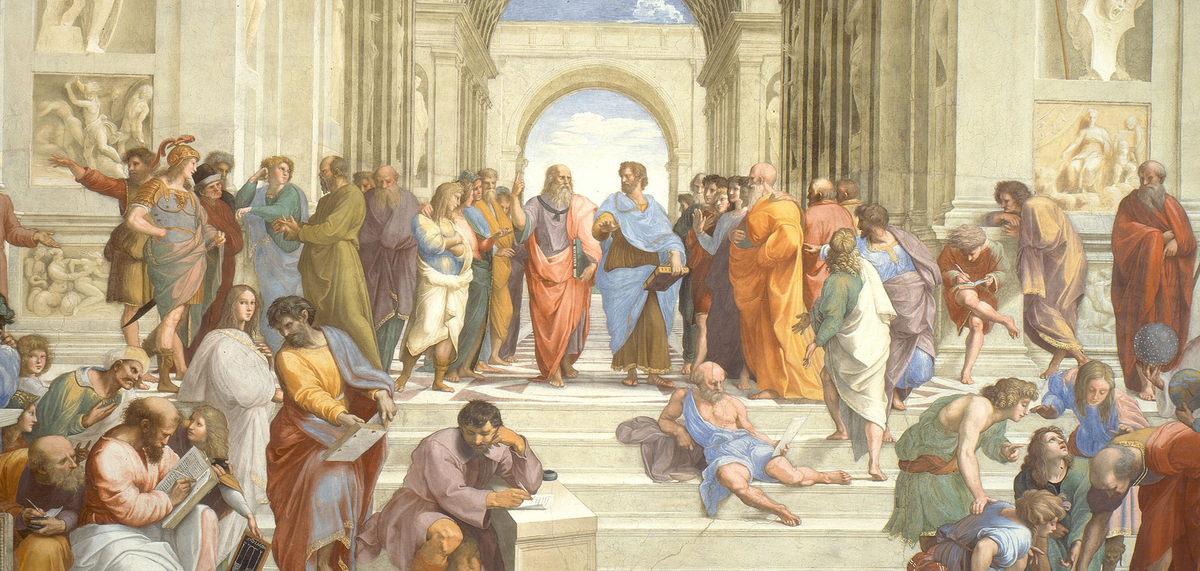
Contemporary political and cultural discourse has descended into a chaotic free-for-all. Dismissive epithets, shibboleths, performative preening, counter-signaling—too often you read an article only to realize you’ve wasted fifteen minutes on an incoherent word salad. Properly establishing a frame of reference is essential as the New Christian Right begins to chart the long course toward political victory. For more than two centuries, that frame has been widely understood as Left and Right.
The Frame of Left/Right
Since the 18th century, Left and Right have served as the common shorthand for political identity. This frame is rooted in the French National Assembly: those sitting to the president’s right favored monarchical order, while those to his left favored revolution. The French Revolution was the first political victory for the Enlightenment’s goals of equality and progress. This victory cemented the frame of emancipation/tradition. This morphed into the Left/Right frame that became the received standard for political and cultural thought. The Left came to represent emancipation from tradition and hierarchy, while the Right was defined as reaction against Left progress.
There is a seductive allure to this simple binary: a lone axis between the way things have been and new ideas about what could be. Every man can plant his flag somewhere along it and stake his allegiance. This frame remains the default language of political and cultural discourse not only in America and Europe, but across the modern world.
But it is no longer the 18th century. The Left/Right frame has been stretched, compressed, distorted, and manipulated until it means whatever the man using it desires. One man’s “conservative” is another’s “libertarian.” One woman’s “liberal” is another’s “revolutionary.” The frame that once mapped the distance between ancient wisdom and future utopia, tradition and emancipation, has become a malleable catchphrase for shifting public opinion, obfuscating and signaling virtue. Clear and cogent definitions remain elusive.
The fault lies in the ambiguity. A libertarian and a monarchist both call themselves right-wing because they insist that boys cannot become girls. A democratic socialist and an anarchist both call themselves left-wing, yet clash over the centralization of state power. This ambiguity creates an opening. Unmoored words can be redefined on the fly. This is the oldest trick of subversion; commandeering the words and freezing the forms, resulting in the original meaning being draped like a skin suit. We will return to this later.
Thus “conservative” becomes a label for preserving liberal democracy rather than transcending it. “Progressivism” means managing capitalism with a softer hand, not overthrowing it. Politicians and citizens alike use “progressive republican” or “moderate liberal” or even the self-stylized “conservative anti-fascist"—each oxymoronic upon closer examination. Even words like tradition and freedom are weaponized to defend contradictory positions. One can easily call to mind memes of bombs from Raytheon slapped with LGBT-affirming stickers.
The result is confusion and exhaustion. Debates become endless laps around the cul-de-sac because similar words are employed in the service of vastly different doctrines. What could have been an enlightening and clarifying conversation about ideology becomes a wrestling match over definitions.
A New Frame: Telic/Atelic
It is time for a new frame of reference—one, we hope, that will clearly serve the purposes of the New Christian Right. Recognizing the inadequacies of the Left/Right frame, others have proposed alternatives. The most common is the political compass, which adds a vertical axis of authority. Still others opt for more flair and flourish—order/chaos, or republican/imperial. These can describe different political doctrines, but none of them define Telos. These frames may be clever, but they describe forms, not ends. Liberty/Authority says nothing about what liberty is for. The same goes for the other frames: binary antinomies without purpose, without telos. They collapse into mere preference-mapping. Worse still, they fail as pedagogy, offering no true instruction to the people living under such political forms. Telos provides precisely what these lack.
The beauty of Telos is in its power to both describe and instruct. A knife is for cutting. Man is for God. Conversely, exposing ideas that are contrary to Telos reveal fatal flaws. This brings us to a superior frame, one both simpler and deeper: Telicism and Atelicism. Telicism is the affirmation of Telos: all that God has created has an end, a purpose, a goal intrinsic to its nature. To live rightly is to order oneself toward that chief end. Politics is for the city, the city is for man, and man is for God. Atelicism is the denial or distortion of Telos—whether by outright erasure, or by redefinition. This frame cuts sharper than Left/Right because it speaks in essences rather than accidents, in substances rather than forms.
A civil polity may debate all kinds of methods in pursuit of the public good, but once the very concept of the good is hollowed out, methods become irrelevant. The frame of Telos asks: What is the family for? What is education for? What is the economy for? Ultimately, what is man for? Conversely, an atelic orientation abandons these questions. In this abandonment, the search for truth becomes divorced from the question of essence. Slogans such as “equity,” “choice,” or “freedom” become the dangling victims of parasitical drain, skin suits drifting in the wind. In contrast, the Telic/Atelic frame offers clarity and strength. It’s superiority can be shown in three ways.
Firstly, it is universal and we are asserting universal truth. David says in the twenty-fourth Psalm, “The earth is the Lord’s, and the fullness thereof.” Solomon states that “The Lord has made everything for its purpose” (Proverbs 16:4). We confess that all things made by God have a Telos. Whether politics, art, family, strength, music, or food—each exists ultimately for God.
Secondly, it is clear. It may require some to learn a new vocabulary word, but Telos is clear in its fixed focus. Endless malleability ceases when intrinsic purpose is set in view. A family’s Telos is godly offspring. Education’s Telos is the cultivation of virtue. The state’s Telos is stewardship of land, resources, and people for God. If any deny these ends, they are immediately exposed as destructive.
Thirdly, the Telic/Atelic frame is a defense against subversion. The Left/Right frame can be hijacked by redefining terms; the Telic/Atelic frame resists this. Purpose is either fulfilled or not. This is a hard line, a shield against rhetorical weaponry. The Telic/Atelic frame seizes an idea and slams it into reality. Only the strong survive.
 Cody Justice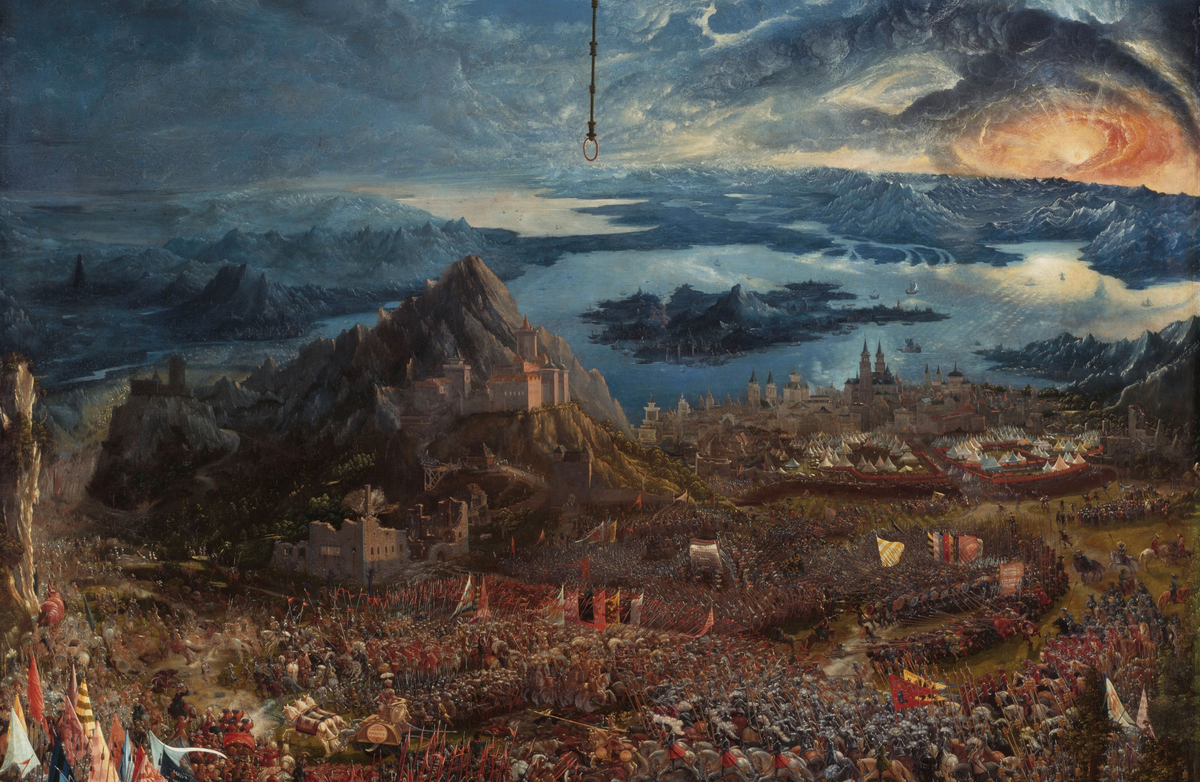
This piece notes some of the ruin wrought by atelic method.
Atelic Nationalism
Among the most urgent questions for the New Christian Right is the telic nature of American nationalism: what is American nationalism for? It is insufficient to merely affirm it. We must boldly assert that American nationalism is for Americans—those of the founding Anglo-Saxon stock and the European peoples who shaped the nation.
Consider Yoram Hazony, chairman of the Edmund Burke Foundation, founder of NatCon, and author of The Virtue of Nationalism. He is one of the most prominent voices of the new Right. Yet Hazony’s work shows how nationalism unmoored from Telos becomes a shucked husk.
Foreign influence always carries the risk of subversion. A foreigner devoted to his own homeland may be an ally, but he cannot serve as the telic voice of ours. Hazony appears to voice correct things, and NatCon’s principles contain substance, yet foreign leadership betrays the essence of nationalism. If the American Right continues to look to men like Hazony, its new nationalism will be atelic. The tenth of NatCon’s principles states the following:
“The cultural sympathies encouraged by a decent nationalism offer a sound basis for conciliation and unity among diverse communities. The nationalism we espouse respects, and indeed combines, the unique needs of particular minority communities and the common good of the nation as a whole.”
This sounds noble, but Hazony confirmed its meaning in an interview with Ezra Klein of The New York Times: NatCon deliberately excludes racialists. What he denies with one hand (propositional nationhood) he restores with the other (a nationalism stripped of ancestry). His nationalism collapses into the same propositionalism it claims to oppose. Hazony commandeered and froze American Nationalism, setting it on display in its full skin-suit horror. His National Conservatism—his brand of nationalism—is Ichabod.
The telos of nationalism is the people of the nation. Denying this is tantamount to denying reality itself. Politics is for the city, the city for man, and man for God. In this frame, America is for Americans—not for ideals, not for the world, not for Israel or any foreign nation. And Americans themselves are for God. Once nationalism is detached from the people and place it exists to preserve, it becomes Atelic Nationalism—more dangerous than open and honest globalism. To divorce race (or sex, for that matter) from politics is to replace real men with a conceptual ‘universal humanity’—a ghost with no flesh, family, or people.
Conclusion
One last caveat: the Telic/Atelic frame is not a silver bullet; the need for discernment, courage, and loyalty never fades. While this frame equips us to fight open enemies and subversives alike, betrayal is still a threat. Men may shift loyalties or simply lie. In such events, Telos remains a double-edged weapon: defending our loves and striking our enemies.
The frame of Left/Right has been exhausted. To be clear, we are not advocating for language police to patrol and punish every time the words Left or Right are used. The goal is to create a frame that meets the needs of the day. Like the men of Issachar, those on the Right must know the times and what to do. A map of open-ended methods will not prevail, nor will a frame so easily exploited by subversion.
The Telic/Atelic frame seeks to force the question. It confronts ideas both new and old with the cold light of God’s reality: “What is this thing for?” And we must remember: once telos is severed, a thing does not merely fail—it becomes a weapon in the service of its opposite.
ATTENTION READER:
Institutional trust is at record lows. But without institutions, we cannot renew our people, much less provide an inheritance to posterity. In response to this crisis and as an organic outgrowth both of necessity and natural interest, American Mantle exists. And so we make our appeal.
Donate to the Cause. Help us reach our monthly goal in order to solidify this crucial institution.