Exiled Yet Victorious: Lessons from the Fathers Who Would Not Bow
If this great cloud of witnesses endured by God’s grace, then the same grace is available to us.

As Christians with many challenges ahead of us, we are not left without the witness of those in church history and Scripture who have faced many challenges. From these godly men, we may both draw encouragement that we are not alone and gain lessons that we can apply to what we are facing in our day.
One lesson can be drawn from the life of Athanasius who stood against Arius and his heresies. Arius taught that the Son was created by the Father and not eternally existent and begotten by him, and thus, not God. In response to the controversy that resulted from this, Emperor Constantine called an ecumenical council to resolve the matter which resulted in the development of the first iteration of the Nicene Creed, affirming Christ’s full deity and equality with the Father. Upon the adoption of the Creed, Arius was exiled by Constantine. This did not mean the end of Arianism though. In the coming years, Arians were able to regroup and gain strength within the church. Arianism's lead promoter, Eusebius of Nicomedia, persuaded Constantine to banish Athanasius, now bishop of Alexandria, for political reasons on trumped-up charges. Upon his death, his empire went to his sons: Constans, who ruled the Nicene-favoring West, and Constantius, who ruled the Arian-favoring East.
After Constantius’ death, Julian the Apostate became emperor and recalled Athanasius’ from his exile, wickedly hoping that it would cause further division in the church. This only increased the controversy, leading to a new council being called. Seeing this attempt at unity, Athanasius was exiled again. Upon Julian’s death, Athanasius was recalled yet again and was able to serve as bishop without incident for the next six years until his death. Although Arianism wasn’t fully defeated in his lifetime, his work left an indelible mark in the church’s fight against heresy.
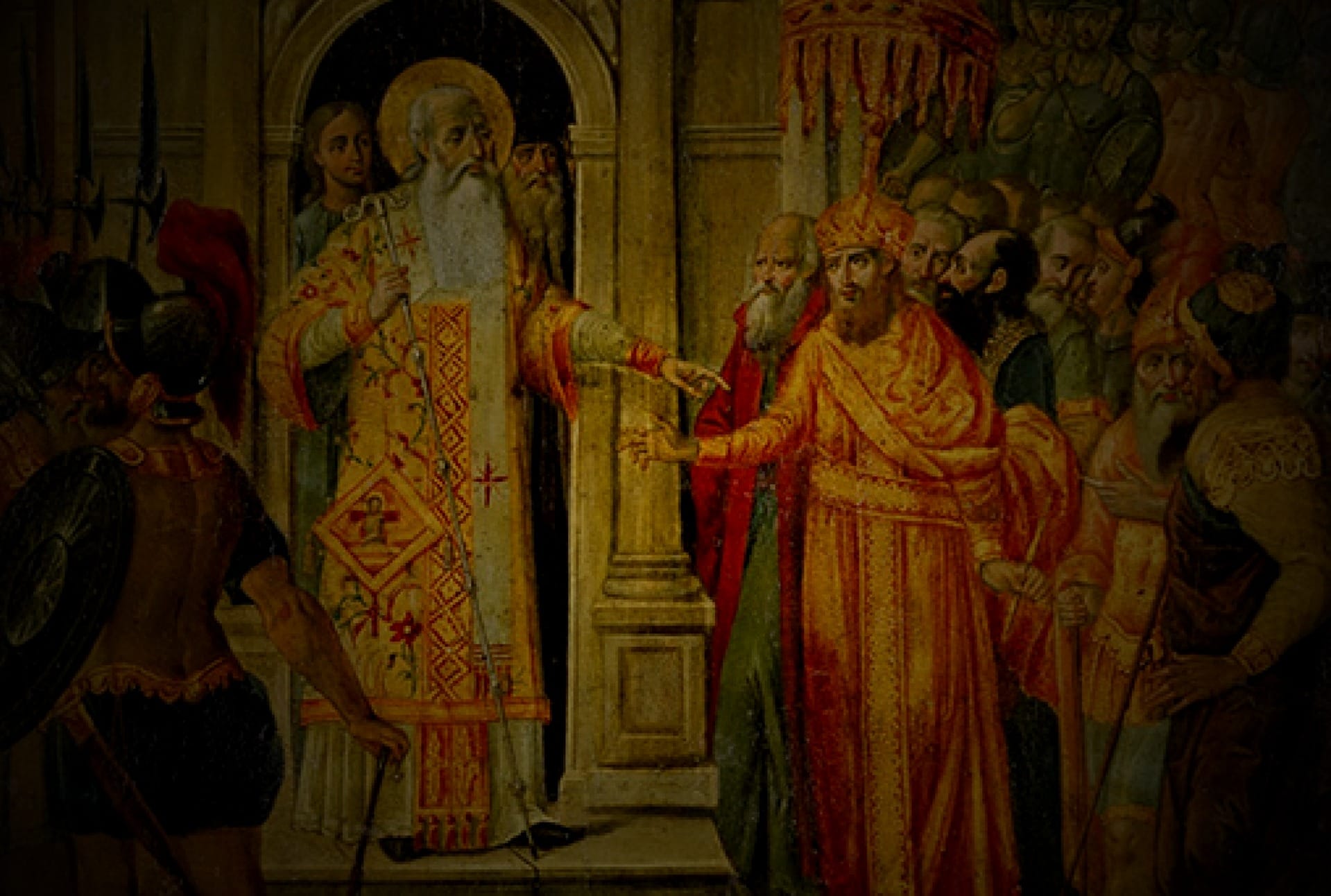
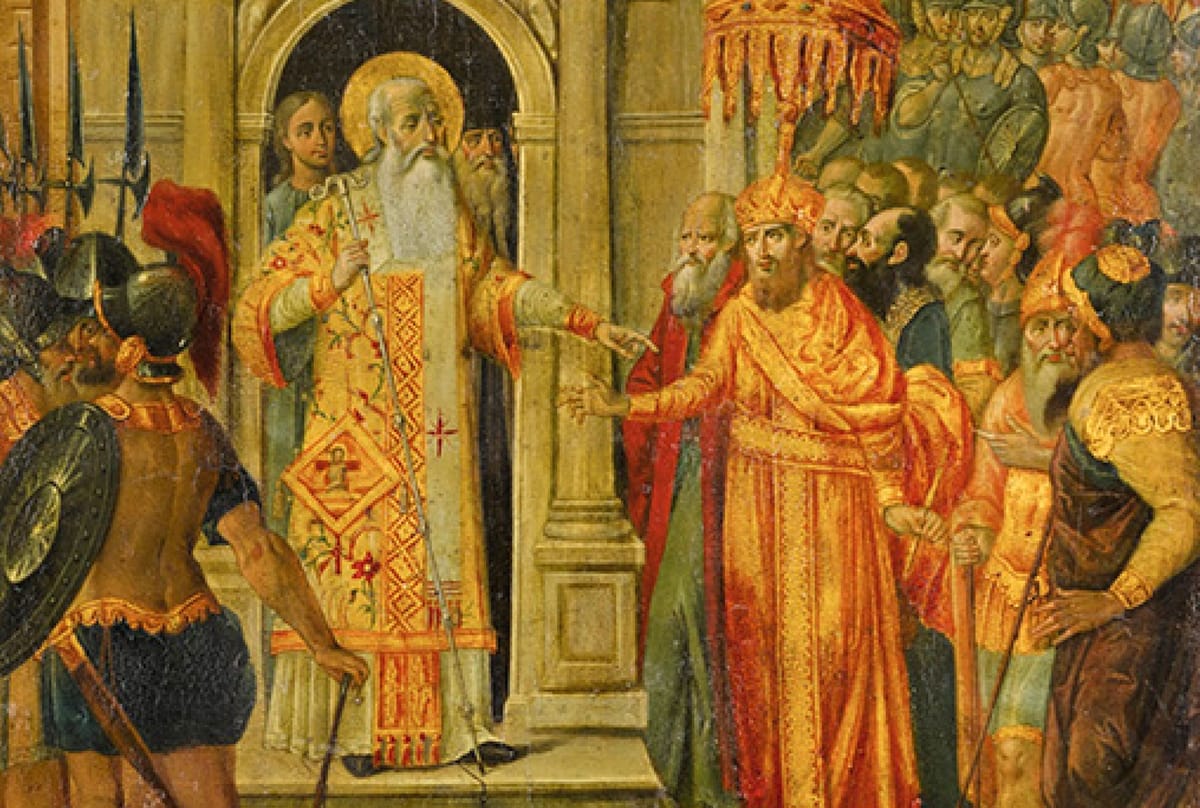
John Chrysostom had similar experiences while serving as the bishop of Constantinople. Though he was well loved by his parishioners, he eventually ran afoul of the imperial family, Arcadius and his wife Eudoxia, due to his uncompromising preaching against the material excesses of the powerful and wealthy. Matters worsened when he preached on Jezebel’s theft of Naboth’s vineyard, after the empress similarly seized the vineyard of a poor widow. During this time, Chrysostom’s relationship soured with Theophilus, the bishop of Alexandria, who began to resent Chrysostom for his increasing popularity. In an attempt to depose him, he traveled to Constantinople, visiting churches along the way to garner support from the clergy, ending with the calling of a council of bishops in Constantinople, where he was deposed and exiled.
Despite this, Chrysostom was quickly called back to Constantinople; a severe calamity had struck the city, and the leaders believed that it was God’s judgment for exiling him. He resumed his bold preaching and eventually barred the emperor and his wife from communion for their sin, who then placed him under house arrest, and after a period he was exiled again despite garnering support from some of the clergy and his parishioners in opposition to the imperial family. He was subject to inhumane treatment which led to his death, with his final words being, “Glory be to God for all things.”
Thirty years later, emperor Theodosius II, the son of Arcadius and Eudoxia, retrieved Chrysostom’s remains in an act of repentance for his parents’ sin. He deposited them in the Church of the Holy Apostles where bishops and emperors were buried. Thus Chrysostom was vindicated before men for his godliness and courage.
In both Athanasius’ and Chrysostom’s lives, we see a similar theme. Both men preached the Word faithfully against the most egregious errors of the day. When faced with tremendous opposition, it is easy for us to rationalize complacency–to simply keep silent in the interests of peace and maintaining the status quo. “After all, imagine the consequences if I spoke out?” we tell ourselves. As we saw in the lives of both men, there were severe consequences for speaking out. Both men not only suffered the loss of their ministries, but they also faced numerous exiles and persecution from the authorities.
Today, we see a similar pattern. Faithful pastors, elders, and parishioners have suffered the loss of their churches for defending fundamental biblical truth in the face of increasing liberalism and apostasy. Men lose employment for refusing to bow to the rainbow jihad and have strained relationships with close family members for simply saying what Scripture says “in the midst of a crooked and perverse nation” (Philippians 2:15). Instead of receiving good in life as a reward for their faithfulness as they ought, men instead suffer greatly at the hands of evil men—not merely from men who openly reject Christ, but also from those who claim to follow him, yet deny him by their actions. The trials that men face today have not changed from those faced by other faithful men in the church’s history. Christ’s words to his disciples continue to be proven in the lives of the faithful. “They shall put you out of the synagogues: yea, the time cometh, that whosoever killeth you will think that he doeth God service” (John 16:2). The disciples were cast from the synagogues, and today, men continue to be cast from the churches.
 Michael Spangler
God does not promise ease in this life, nor does he promise that we will be vindicated in this life. Although men like Athanasius and Chrysostom had peace in the final years of their lives, many men must wait for the Last Day to be vindicated before men. Men such as William Tyndale, Hugh Latimer and Nicholas Ridley, Thomas Cranmer, John the Baptist, Stephen, Paul, and many of the other apostles were persecuted and martyred for their faith, remaining steadfast in faith to the end. “These all, having obtained a good report through faith, received not the promise” (Hebrews 11:39). Some must wait for their heavenly reward for their faithfulness to Christ, as he promised in the Sermon on the Mount: “Blessed are ye, when men shall revile you, and persecute you, and shall say all manner of evil against you falsely, for my sake. Rejoice, and be exceeding glad: for great is your reward in heaven: for so persecuted they the prophets which were before you” (Matthew 5:11–12).
Christ suffered for his faithfulness to the Father more than any Christian and he too had to wait for his final vindication. Just as Christ was seated at the Father’s right hand as a reward for his faithfulness, so we are promised vindication before men and immeasurable rewards from the Father for ours. Knowing that Christ received what was promised to him should give us great hope and motivation to remain faithful despite persecution, regardless of whether we are rewarded in this life.
Although Christ gives many encouragements to faithfulness, he also gives us warnings. In Revelation, John writes, “But the fearful, and unbelieving, and the abominable, and murderers, and whoremongers, and sorcerers, and idolaters, and all liars, shall have their part in the lake which burneth with fire and brimstone: which is the second death” (Revelation 21:8). The first people that are listed among the damned are not the sodomites and idol worshipers as we might expect, but the cowardly—those who knew what was right and failed to do so because they fear man more than they feared God. All too often we see Christians, and even ministers, succumb to worldly ideologies. Such cowardice risks eternal damnation, a penalty that pales in comparison to words of affirmation that we may receive from men in this life. This should give us great fear that we might displease God by inaction and spur us on to remain faithful and receive the words of affirmation from him, something that is of far greater worth.
The weight of these examples and warnings is not meant to leave us in despair, but to strengthen our resolve. If this great cloud of witnesses endured by God’s grace, then the same grace is available to us. God has promised to complete the work that he began in his people, which ought to give us great hope in whatever trials God has given us. In the face of both encouragement and warning, we rest not in our own strength but in God’s. He alone can sanctify, preserve, and keep us faithful until the end—just as his Word assures us:
“And the very God of peace sanctify you wholly; and I pray God your whole spirit and soul and body be preserved blameless unto the coming of our Lord Jesus Christ. Faithful is he that calleth you, who also will do it” (1 Thessalonians 5:23–24).
ATTENTION READER: We need your help.
Institutional trust is at record lows. But without institutions, we cannot renew our people, much less provide an inheritance to posterity. In response to this crisis and as an organic outgrowth both of necessity and natural interest, American Mantle exists. And so we make our appeal.
Donate to the Cause. Help us reach our monthly goal in order to solidify this crucial institution.