Egalitarianism and the Burden of Proof
A complementarian's position is defined by the implicit denial that nature can be used to support nature.

"Doth not even nature itself teach you, that, if a man have long hair, it is a shame unto him?"
—1 Corinthians 11:14
Of all the movements in the last century, few things have been more destructive to Christendom than the sexual revolution. Even now, the destructive tidal wave continues to sweep over the shore, strangling every remnant of innocence and decency it touches. Perhaps most surprising, however, is that the church—an institution many looked to for a defense of gendered godliness and Christian propriety—has responded most inadequately. Some congregations were quick to adopt the tenets of this egalitarian faith, retaining a mere shell of the Christian religion in the process. Others simply covered their eyes, hoping that the carnal propaganda and gender turmoil would simply disappear.
But as the sexual revolution was normalized, conservative-minded churches found themselves scrambling for a new apologetic that wouldn't be immediately dismissed under the new cultural paradigm—a rhetorical emphasis intended to capture the positive, wave-like energy of a movement that wasn’t their own, yet still to make it appear grounded in truths of Scripture. So, in the 1980s, evangelicals finally managed to fit their missional emphases and Biblical commitments into a seemingly coherent term: "Complementarianism." This reactive movement culminated in 1987 with the Danvers Statement, birthing a new era in Christian theology and cementing complementarianism as a pillar of evangelical culture. But what did it truly mean to be a complementarian?
According to Got Questions, complementarianism can be summed up by the idea that "masculinity and femininity are ordained by God and that men and women are created to complement, or complete, each other." This is borne out in affirming a man's role is to lead, while a woman's role is to nurture, both genders still being largely equal before God. The doctrine, as stated, was simple enough, though the specifics of these "distinct roles" left much room for interpretation.
The church, already bearing the responsibility of explaining gender to a confused culture, soon found itself swimming in a sea of ambiguity, hesitating when tasked to articulate anything but the bare minimum of Christian sexual ethics. This uncertainty gave rise to the "thick" versus "thin" controversy, a debate that erupted in the mid-2010s as complementarians sought to clarify the scope and essence of their convictions. Thin complementarians generally argued for the narrowest application of sexual design, restricting the biblical gender role to little more than a technicality of male-only eldership in the church and complementary marital positions. Thick complementarians, by contrast, maintained that God's design for gender extended beyond the visible church, influencing the family and other aspects of society.
Some popular evangelicals, such as Kevin DeYoung, explicitly endorsed this thick complementarian position, even as he left "room for different conclusions." This intramural debate eventually revealed the true nature of the matter at hand: that the differences in opinion were determined by the extent to which one could presume the natural distinctions between the sexes in a given environment. One side seemed to present a natural, holistic view of gender that encompassed all of life, while the other side sought to arbitrarily limit God's design to nuclear family dynamics and church polity.
Author Joe Rigney, former president of Bethlehem College and Seminary, offers a keen insight into the division between the two camps.
"Over the years, folks have sought to distinguish between broad and narrow complementarianism (or thick and thin complementarianism, or hard and soft complementarianism). [...] Let me suggest that the key division in all of these denominations (except ACNA, which already has egalitarian churches within it) is between natural complementarianism (or patriarchy) and ideological complementarianism."
Indeed, the lines of debate could not be clearer. When complementarianism reduced natural conventions to a kind of ideological conviction, a false tension was formed between natural law and the truths of Scripture. The thin side assumed an egalitarian starting point and supplemented it with key complementarian positions, while the thick side assumed a natural, patriarchal starting point, emphasizing the various biblical texts that supported their natural conclusions. So if a thick complementarian is simply a patriarchalist, what good does it do to call yourself a complementarian? Good question.
The controversy has thus highlighted two significant factors. First, that to even be considered a complementarian, one has to accommodate the lowest common denominator. Though the unity of the complementarian movement may have started as affirming God's design for gender roles, that unity—in practice—meant endorsing and co-laboring with those who did little more than affirm the bare minimum ecclesiological implications of gender-specific verses. In this way, both egalitarians and patriarchalists could, in theory, join the complementarian fold, so long as they relegated creation-order issues of sexuality to theologically insignificant "ideological convictions." To put it bluntly, a "thick complementarian" was a man who held a few patriarchal convictions, yet without any of the meaningful distinctives or practical application.
Secondly, the thick vs thin controversy also highlighted that the framing of the debate had been turned on its head. Over time, a tired form of Biblicism became the norm, and, combined with the culturally prevalent assumptions of egalitarianism, a handful of verses became the rule by which nature is measured. Patriarchalists became complementarians not because of the strength of the egalitarians' arguments, but because they unquestionably accepted the cultural assumptions and framing of the sexual revolution. A thorough examination of the ideological bottom limit of complementarianism would be a fascinating topic for further articles. However, it is this second point that I will be addressing in this article: how a healthy assumption of natural law ought to frame the debate, and how it contributes to setting the burden of proof.
The False Doctrine Of Multa Mendacia
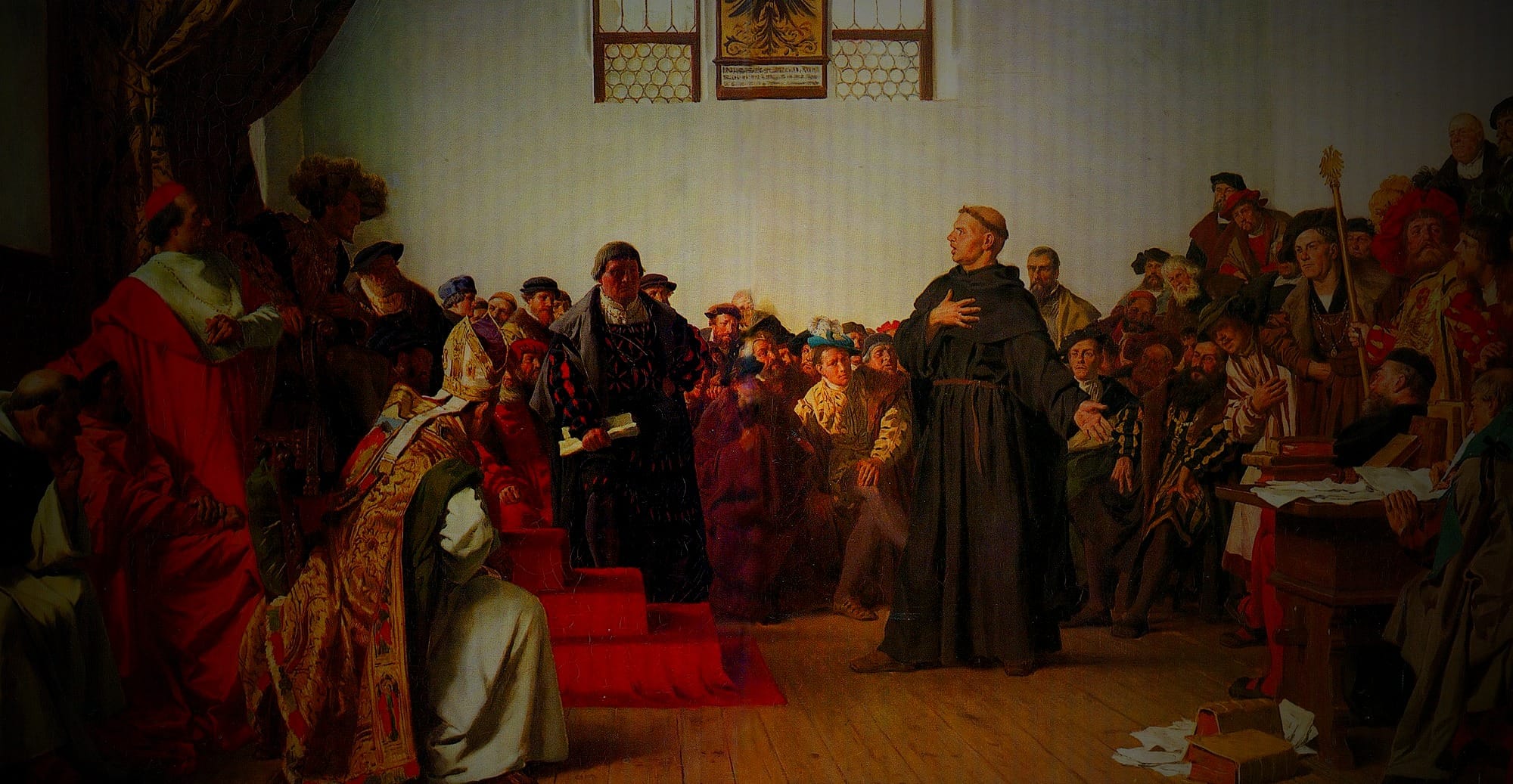
For the Reformed world, one of the most notable conflicts in human history was between Martin Luther and the Roman Church. Not only did the debate accurately represent—and even define—the ongoing tension between Protestantism and Romanism, but it provided a clear framework for identifying the assumptions being imported into the debate.
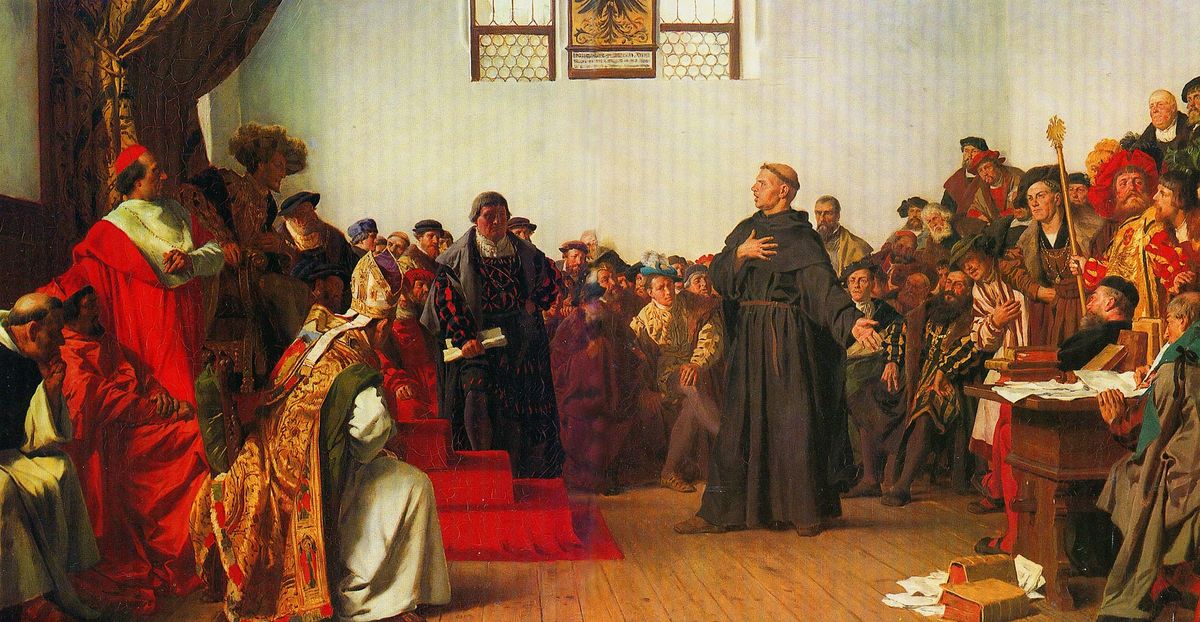
At the infamous Diet of Worms, Luther attempted to state the matter in the most concise form possible, starting with his disagreements:
"...I cannot submit my faith either to the pope or to the council, because it is as clear as noonday that they have fallen into error and even into glaring inconsistency with themselves."
Indeed, Sola Scriptura originated as the only coherent way to reconcile the infallibility of God's Word with the plurality of self-contradicting positions held by the Roman Church. Luther's belief, which he articulated in the following sentence, was that the burden of proof lay on those who were making the boldest of claims. Luther believed his opponents were arguing that special revelation ought to be interpreted such that it contradicts both itself and reason. Such an extraordinary claim would require extraordinary proof.
"If, then," said Luther,
"I am not convinced by proof from Holy Scripture, or by cogent reasons, if I am not satisfied by the very text I have cited, and if my judgment is not in this way brought into subjection to God's word, I neither can nor will retract anything; for it cannot be either safe or honest for a Christian to speak against his conscience. Here I stand; I cannot do otherwise; God help me! Amen."
Centuries later, it seems that the terms of the debate remain largely unchanged. The Roman Church continues to advocate for a large number of dogmas and traditions that contradict both reason and the special revelation it claims as its origin. Like the debate surrounding complegalitarianism and patriarchy, the matter is not won by the side that can produce more proof-text verses, but by holistically applying special revelation such that it neither abuses Scripture nor the goodness of God's created order into self-contradiction.
Though certain ideologies appear to tolerate their collection of paradoxes for a moment, they will inevitably fall to the arguments of reason. Thus, establishing the burden of proof was prominently featured in the years of the Reformation, though it is not a particularly novel concept in the Christian tradition.
Paul warns Timothy of seducing spirits touting the "doctrines of devils" (1 Timothy 4:1), who sear consciences by exploiting Scripture and adding to God’s Word. The conscience, as described by the Westminster Confession of Faith, is to be "free from the doctrines and commandments of men, which are, in anything, contrary to his Word." In this way, Christians have guarded against not only ecclesiastical tyranny but also the self-contradicting dogmas that so love to twist Scripture.
The Egalitarian's Burden
While some theologians may enjoy jumping into the largely meaningless thick/thin debate, arguing about which camp of trans-compleme-galitari-genderism is best, it should be noted that the real debate will only transpire when it collides with an entirely different set of assumptions. Today's egalitarianism, born out of the Darwinian notion of equality through meaningless biology, should no longer frame the debate without question. It is past time for theologians to demand that it substantiate its claims.
This insistence should not come as a surprise. In an age where the word "man" is used interchangeably with the word "woman," it should not astonish our theologians that Christians will be vigorously reevaluating their various preconceptions up to this point. This journey will invariably lead them to Genesis, where they find the story of an Almighty God creating two distinct genders. Man, placed in the garden of Eden to dress it and to keep it, and Woman, given to him as a help meet for him. It is in this story that the order of marriage and the good of hierarchy are established, even before sin has entered the world.
"God did not create two chiefs of equal power," wrote John Calvin, "but added to the man an inferior aid."
 Jason Dixon
Indeed, trying to conceive of Adam as anything but a man, the leader and provider to a budding human race, or, trying to conceive of Eve as anything but a woman, perfectly suited to the tasks of her gender, grinds against the very nature of humanity. The task of egalitarianism, therefore, is not fulfilled by merely proving God's creation was corrupted by sin. That much is obvious. The egalitarian must prove, beyond a shadow of a doubt, that God now wants us to overthrow the order he so firmly established for mankind at creation—that gendered purpose that survives in even our basest instincts. It is no surprise, then, that such a task has proven impossible for the egalitarian.
The complementarian position, as a sort of in-between and indecisive ideology, attempts to avoid the large burden of proof that a total egalitarian is obligated to carry. But it still has responsibilities of its own, as evidenced by the thick versus thin debate. As previously noted, the complementarian movement, insofar as it represents a movement, affirms the existence of pre-fall gender distinctions. Yet, the context of those distinctions is articulated as the "principle of male headship in the family and in the covenant community." A complementarian's position, therefore, is not defined by his usage of Scripture to support nature, but by the implicit denial that nature can be used to support nature.
In this way, he arbitrarily limits God's design for gender to two relatively narrow applications, using an argument of silence as his proof. Though such an argument may prove moderately adequate at winning intra-egalitarian arguments, this method is wholly ineffective when challenged with a comprehensive vision of marriage, family, and society; a view in which the truths of Scripture perfectly align with the constitution of reality, not burdened by self-contradicting claims. If the church is to truly counter the sexual revolution, it must, like Luther, force the gender tyrants to reconcile their own arguments.
This is what it means for the church to embrace natural law.
On one hand, we establish the terms of the debate, while on the other hand, we boldly apply rationality and natural principles to the questions of our time. The spiritual transgenderism which has set out to destroy hierarchy, and is still deeply entrenched in churches across the nation, must be discredited in the clearest of terms.
William Gouge noted,
"Nature hath placed an eminency in the male over the female so as where they are linked together in one yoke, it is given by nature that he should govern, she obey. This did the heathen by light of nature observe."
Someone could write an entire volume listing all the debates in which the modern church has abandoned its holistic embrace of God's Word and his created order. It saddens me to see even fellow Christians opposing natural law, or writing it off as some kind of “paganism.” Some claim that, without a New Testament imperative for preserving your ethnicity or loving your nation, God has implicitly mandated his people to behave worse than the heathens. This ludicrous form of argumentation, detached from the normative principles that govern reality itself, follows a dangerous path of ecclesiastical tyranny that pits the Lord of creation against the Lord of conscience. If we are to avoid repeating the errors of the Roman Church in the era of the Reformation, then we must constantly seek to harmonize the arguments of Scripture and reason instead of sliding into a pit of self-contradictions and despotism.
ATTENTION READER:
Institutional trust is at record lows. But without institutions, we cannot renew our people, much less provide an inheritance to posterity. In response to this crisis and as an organic outgrowth both of necessity and natural interest, American Mantle exists. And so we make our appeal.